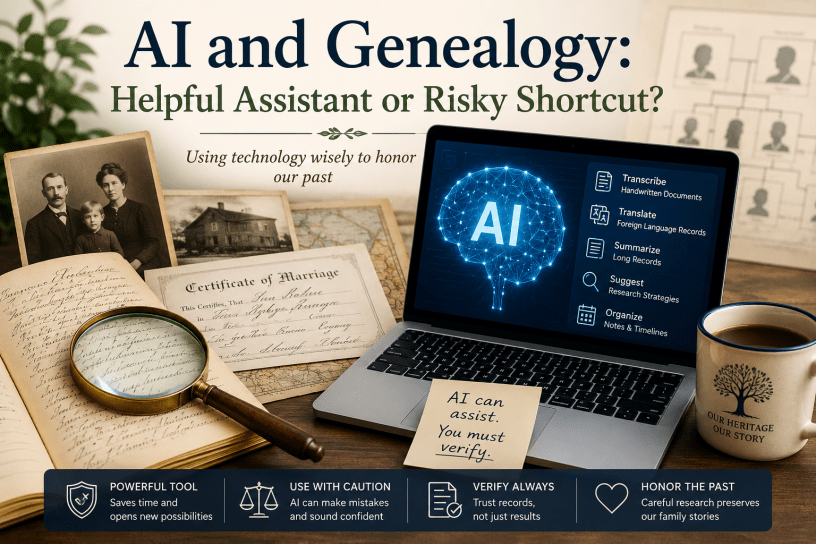
Artificial intelligence has become one of the hottest topics in genealogy. It can transcribe handwritten documents, summarize long records, translate foreign languages, suggest research strategies, and even draft family histories in seconds. For many researchers, AI feels like having a research assistant available around the clock.
But is AI a revolutionary tool or a risky shortcut?
The answer is both.
The Good: AI Can Save Time
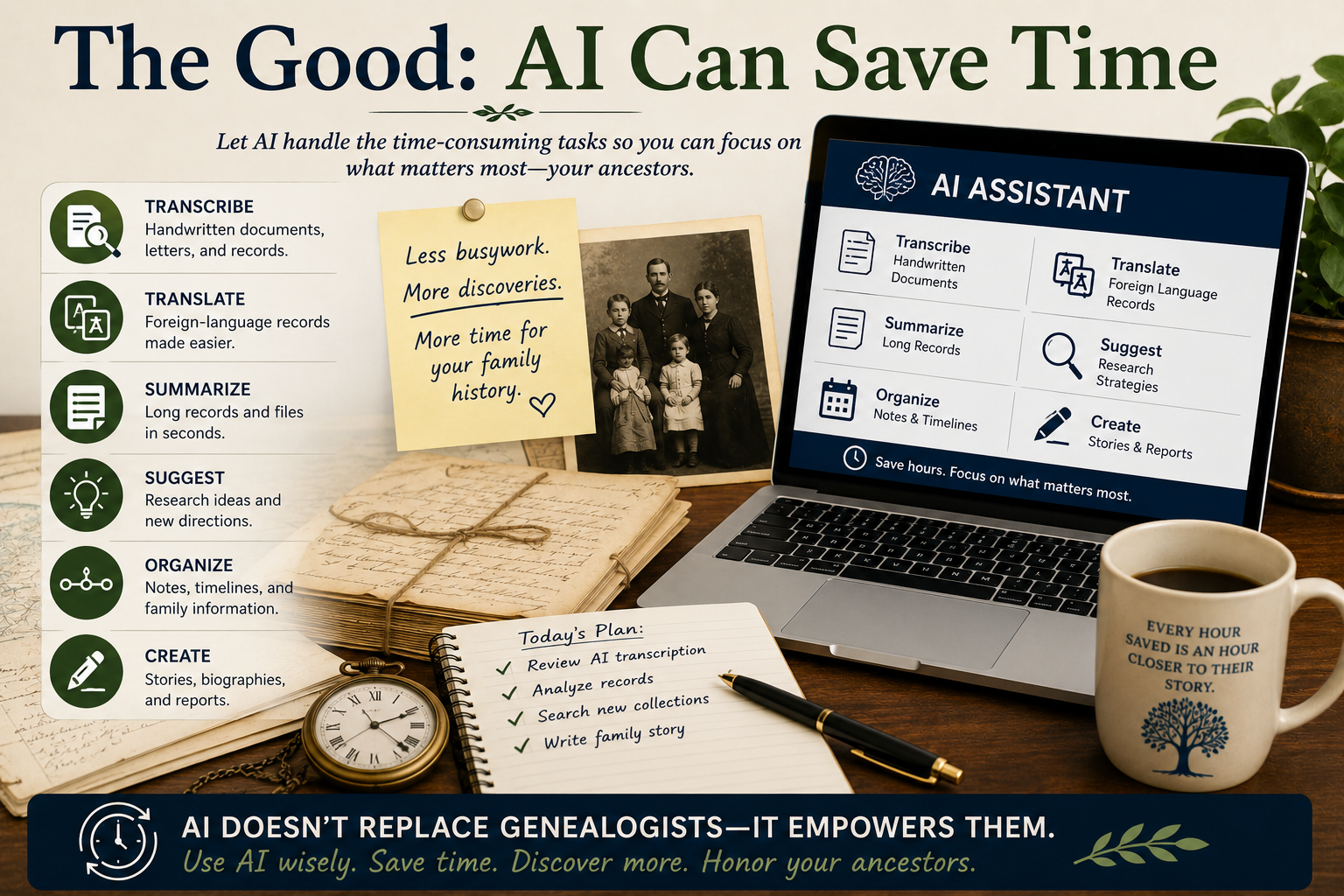
Genealogy often involves hours of repetitive work. AI excels at many of these tasks.
It can:
- Transcribe handwritten letters, wills, and diaries.
- Summarize lengthy probate files and military pensions.
- Translate records from languages such as German, French, Spanish, or Latin.
- Suggest research plans when you’ve hit a brick wall.
- Organize notes into timelines and family narratives.
- Help draft blog posts, biographies, and family stories.
Instead of spending hours formatting information, researchers can devote more time to analyzing evidence and discovering new records.
AI Is Not a Genealogist
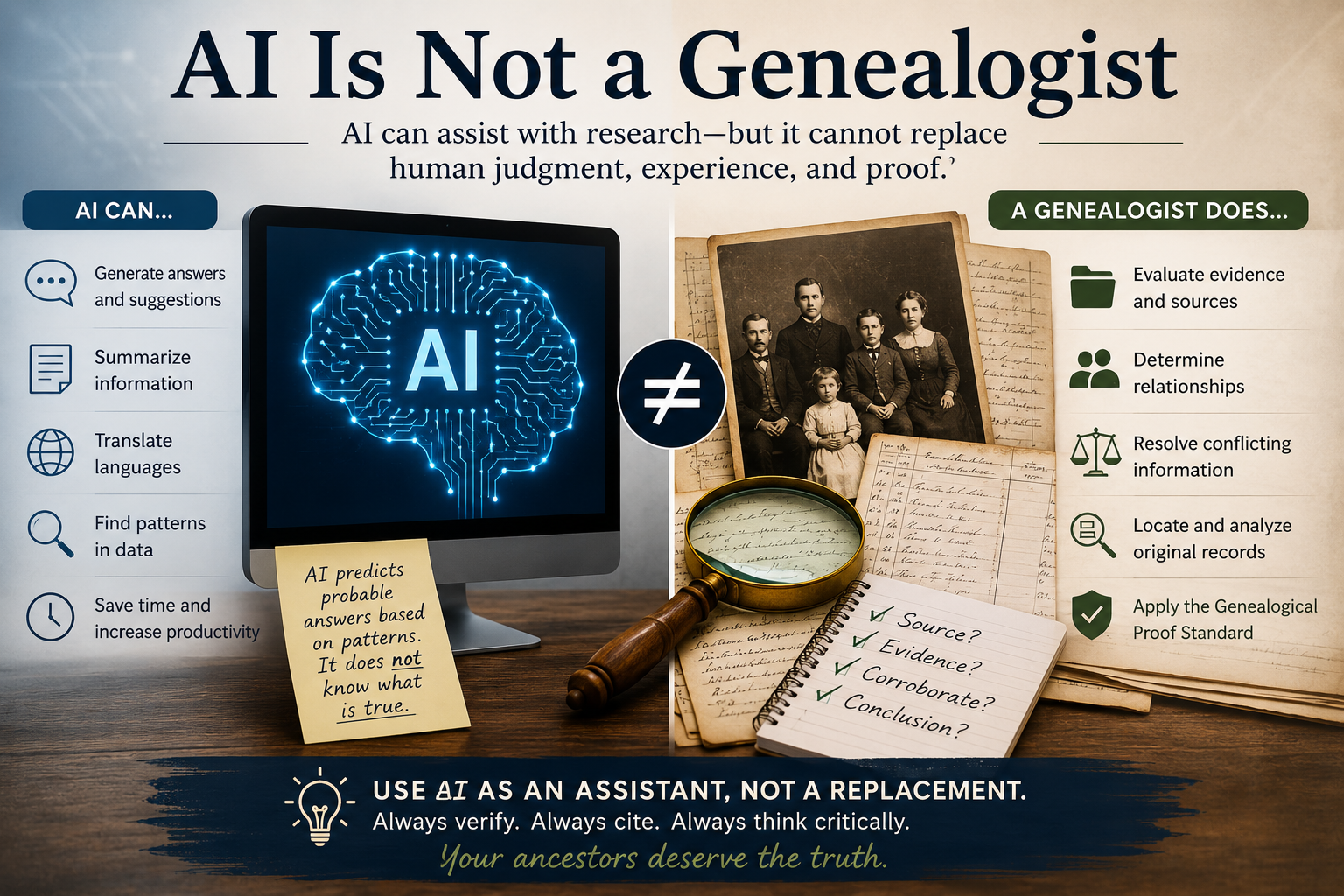
Despite its impressive abilities, AI has one significant limitation.
It does not know whether something is true.
AI predicts likely answers based on patterns in data. If information is missing, contradictory, or unavailable, it may confidently produce incorrect names, dates, relationships, or historical details.
Genealogists sometimes call these mistakes “hallucinations.”
For example, AI might:
- Invent a marriage date.
- Assign parents who never existed.
- Misidentify a military regiment.
- Confuse two people with the same name.
- Create convincing-looking citations that are completely fictional.
If you’re not careful, these errors can spread through family trees and online databases.
Trust Records, Not Confidence
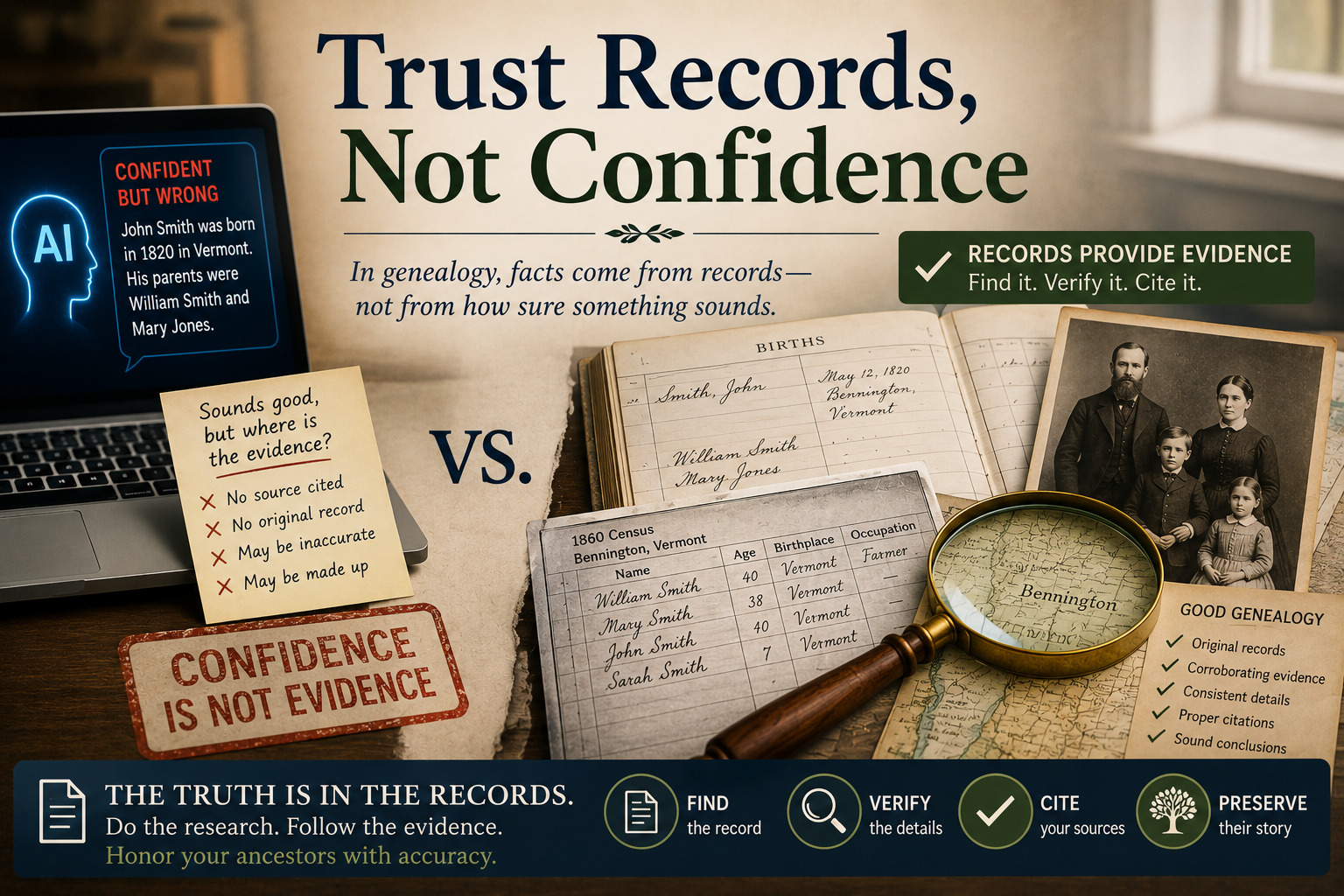
One of AI’s greatest dangers is that it often sounds certain—even when it is wrong.
A well-written paragraph isn’t evidence.
Every statement should still be supported by original records whenever possible.
Ask yourself:
- Where did this information come from?
- Can I locate the original document?
- Does the evidence agree with other sources?
- Is there a proper citation?
Genealogy has always depended on evaluating evidence. AI doesn’t replace that responsibility.
The Best Uses for AI
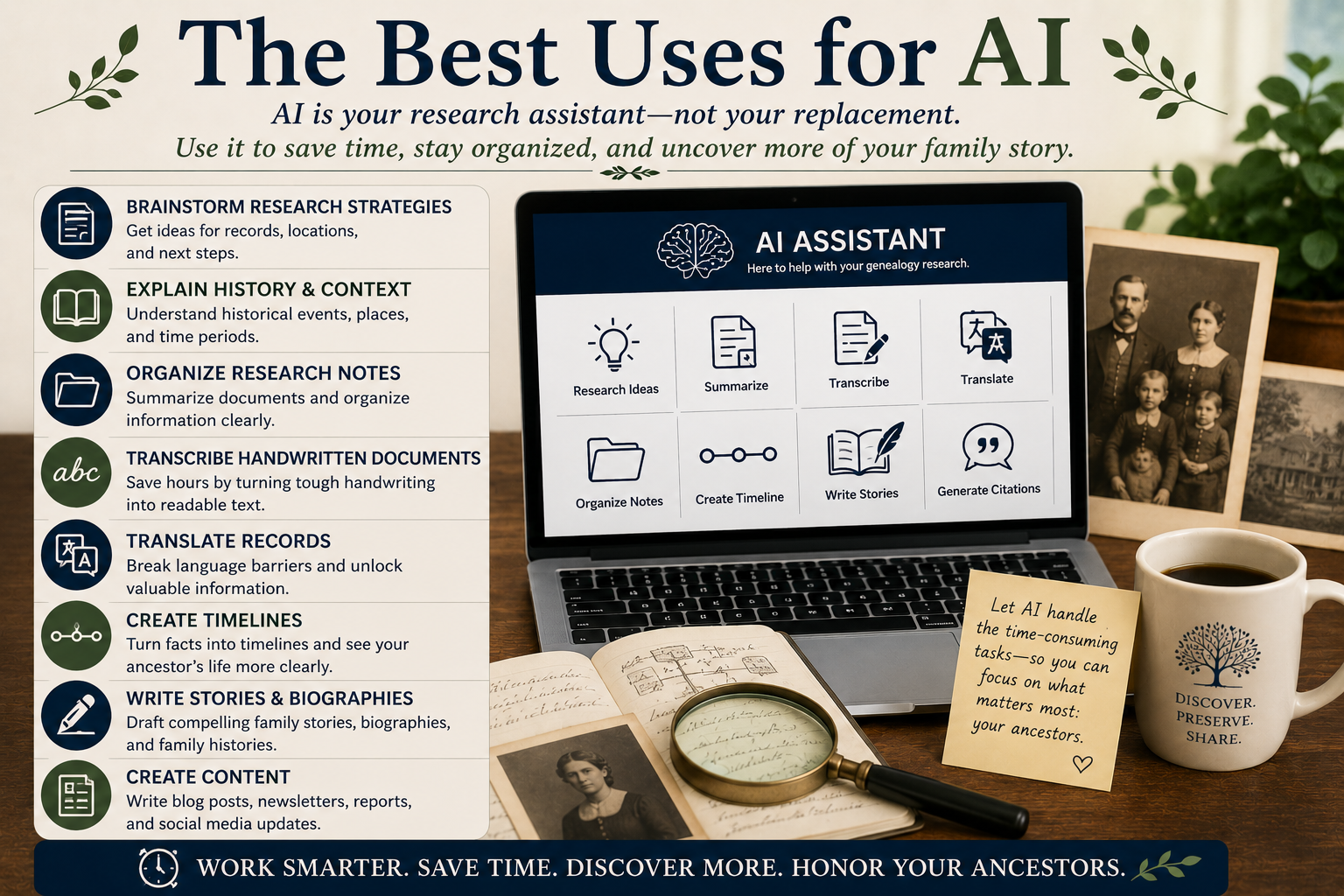
Think of AI as your research assistant—not your lead researcher.
Excellent uses include:
- Brainstorming research strategies.
- Explaining difficult historical contexts.
- Organizing research notes.
- Transcribing handwritten documents.
- Translating foreign-language records.
- Drafting biographies and family stories.
- Creating timelines from verified facts.
- Helping write newsletters or blog posts.
In these roles, AI can dramatically increase productivity while allowing you to remain in control of the research.
Where Human Judgment Matters
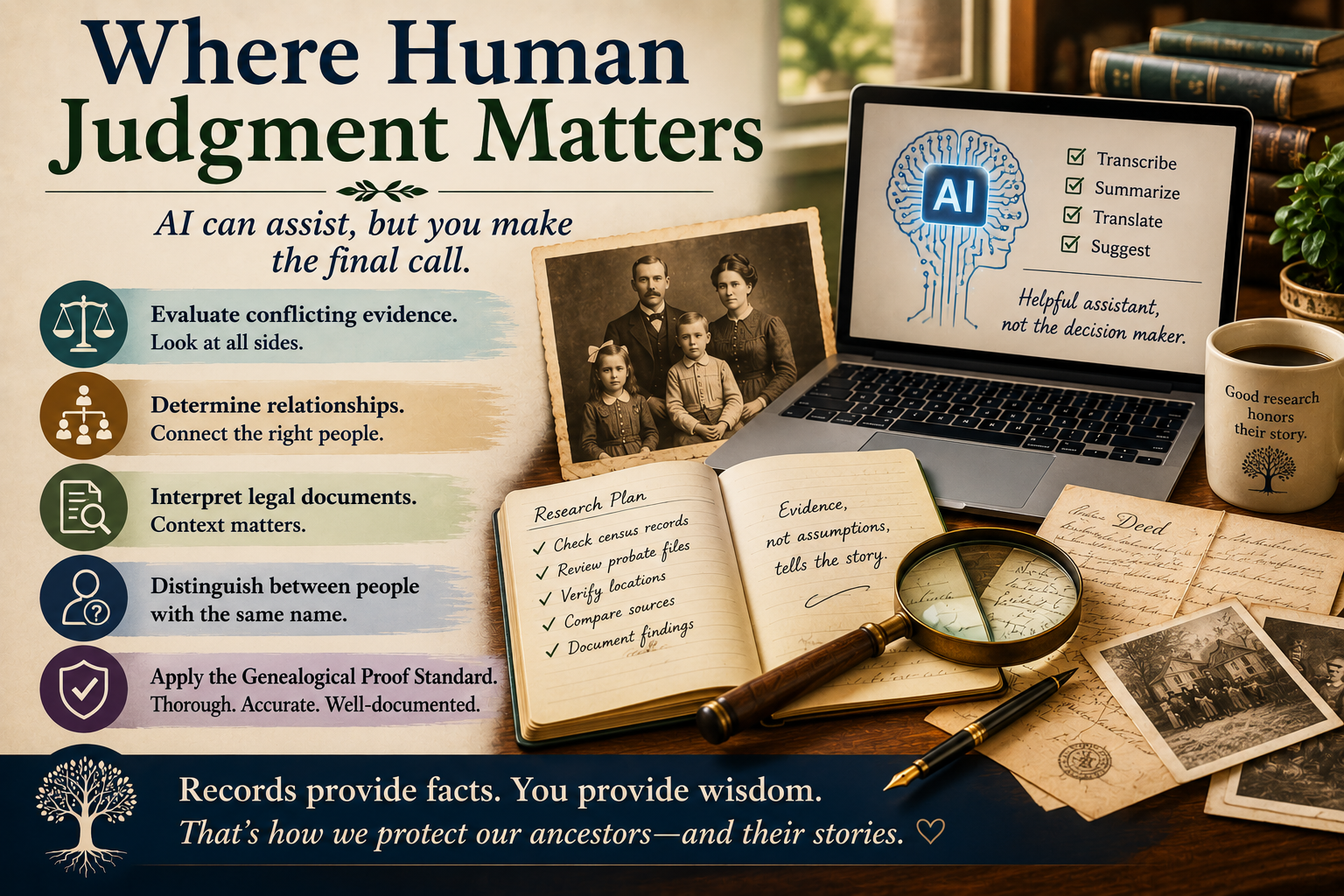
Some tasks still require an experienced genealogist.
These include:
- Evaluating conflicting evidence.
- Determining family relationships.
- Interpreting legal documents.
- Distinguishing between individuals with identical names.
- Applying the Genealogical Proof Standard.
- Drawing research conclusions.
AI can assist with these tasks, but it should never make the final decision.
Think of AI Like GPS
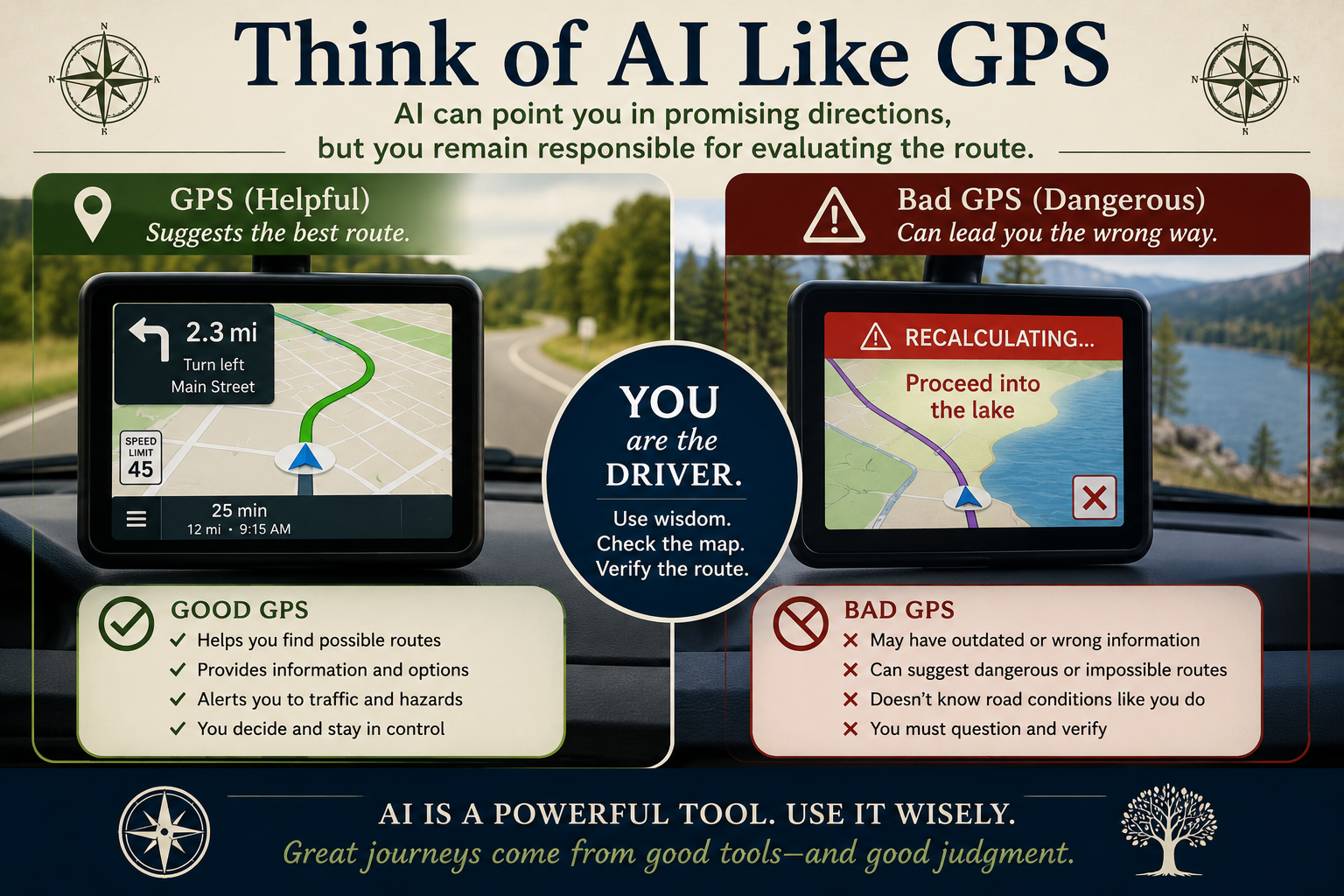
Imagine driving to an unfamiliar destination.
A GPS can suggest a route, warn about traffic, and estimate your arrival time.
But if the GPS tells you to drive into a lake, you don’t obey—you use your own judgment.
AI works the same way.
It can point you in promising directions, but you remain responsible for evaluating the route.
The Future of Genealogy
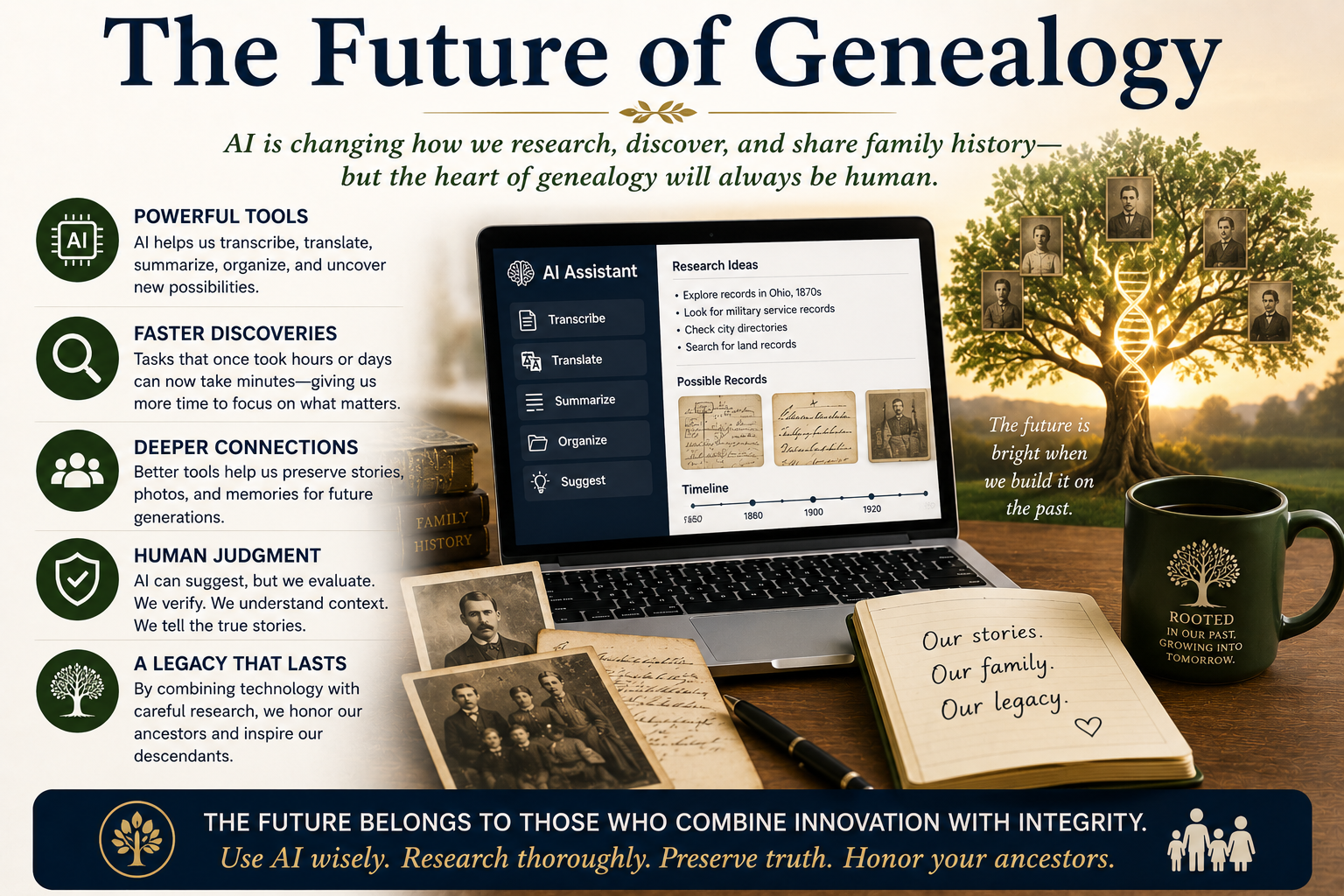
Artificial intelligence is changing genealogy much the way digital cameras changed photography or search engines changed historical research. It isn’t replacing genealogists—it is changing how they work.
Researchers who learn to combine AI’s speed with traditional research methods will have a powerful advantage.
The most successful genealogists won’t be the ones who avoid AI.
They’ll be the ones who know when to trust it—and when to verify it.
Final Thoughts
AI is neither magic nor menace.
Used wisely, it can save countless hours, spark new ideas, and make family history more accessible than ever before.
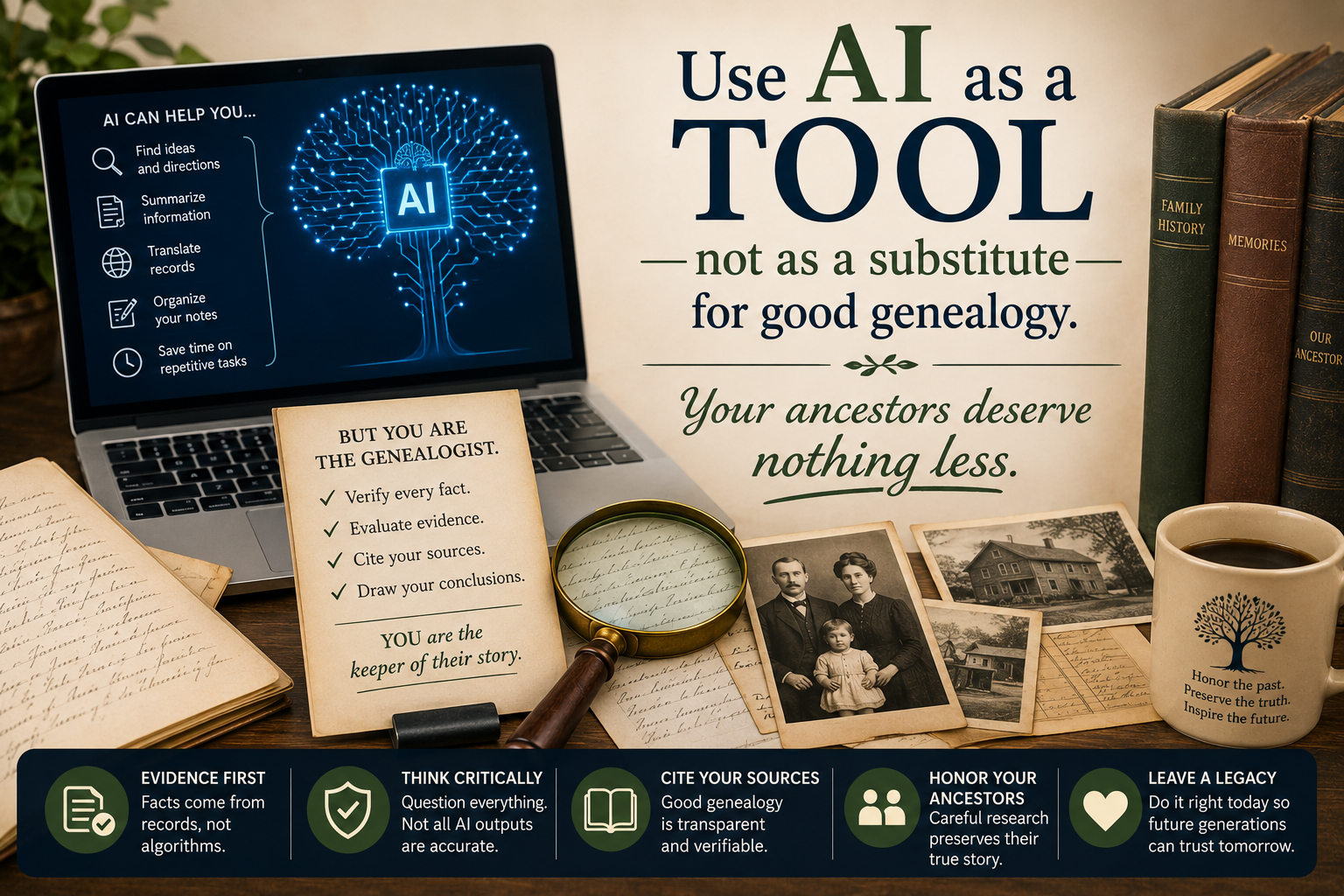
But genealogy has always been about evidence, careful analysis, and preserving the truth about our ancestors.
No matter how advanced technology becomes, those principles remain unchanged.