
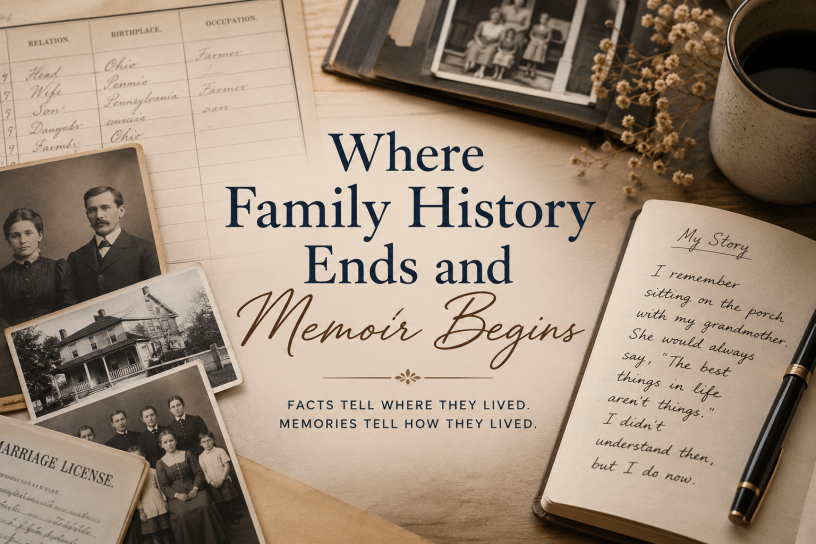
Knowing the difference can help you preserve both your family’s story and your own.
My grandson asked me recently, “Did you even have a phone when you were little?” I laughed and told him that yes, I did have a phone; I wasn’t that old!” But he got me thinking about how the generations coming up will not know who I am, who I was. It was an honest question that he asked; he simply didn’t know anything about my childhood.
This is where journaling comes in, and memoir comes in. The preservation of my stories for future generations.
Every family historian eventually reaches a point where the records stop telling the whole story. Birth certificates identify parents. Census records reveal addresses. Marriage licenses confirm relationships. Obituaries summarize lives in a few carefully chosen paragraphs.
But none of those records tell us what it felt like to stand on a dock saying goodbye to a brother leaving for war. They don’t explain why a grandmother never spoke about her childhood or why a family abandoned a farm they had worked for generations.
That is where family history ends…and memoir begins.
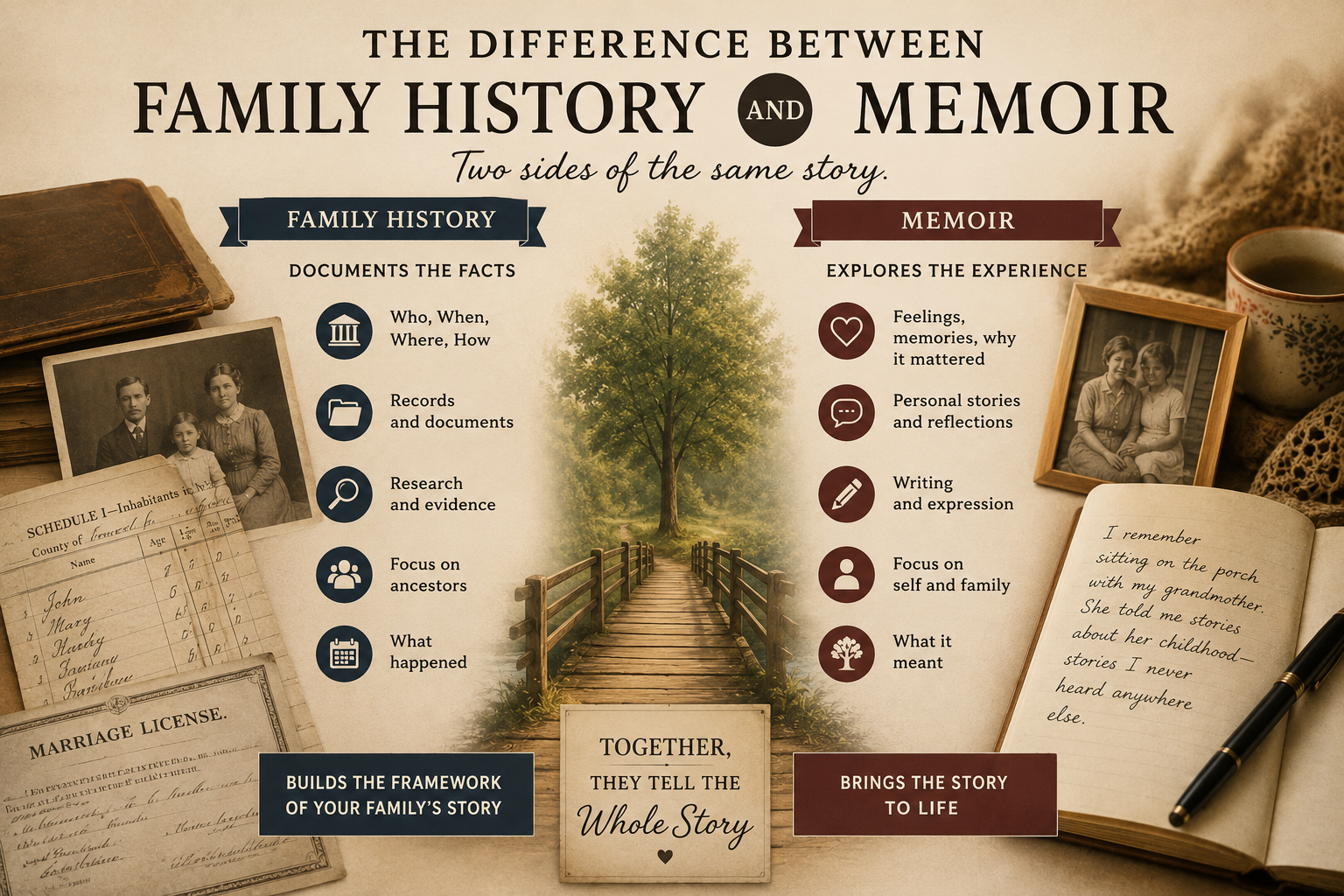
The two are closely related, but they are not the same thing. Understanding the difference can make you a better genealogist, a better writer, and ultimately a better keeper of your family’s legacy.
Every Family Historian Has a Memoir Waiting
Many genealogists spend years researching everyone except themselves. They know six generations of ancestors. They have scanned thousands of photographs. They own shelves of binders.
Yet their children know almost nothing about their story.
Someday, your descendants will wonder:
- What kind of person were you?
- What made you laugh?
- What frightened you?
- What were your greatest regrets?
- What dreams did you never give up?
- What lessons did you hope your family would remember?
No census record will answer those questions.
The Space Between Fact and Memory
Sometimes family history uncovers mysteries that records cannot solve. Perhaps your grandmother refused to discuss her parents. Maybe an uncle disappeared from family photographs. Perhaps there is a gap in the records that no amount of research can fill.
Memoir doesn’t invent answers. Instead, it honestly explores uncertainty.
You might write:
“I don’t know why my grandmother never mentioned her childhood. I only know that every time someone asked, she quietly changed the subject.”
That uncertainty is part of your family’s history too.
Your Story Matters Even If It Seems Ordinary
One of the biggest obstacles to writing memoir is believing your life isn’t interesting enough. Nearly everyone thinks this. But memoir isn’t about extraordinary adventures. It’s about ordinary lives honestly remembered. Future generations won’t care whether you became famous.
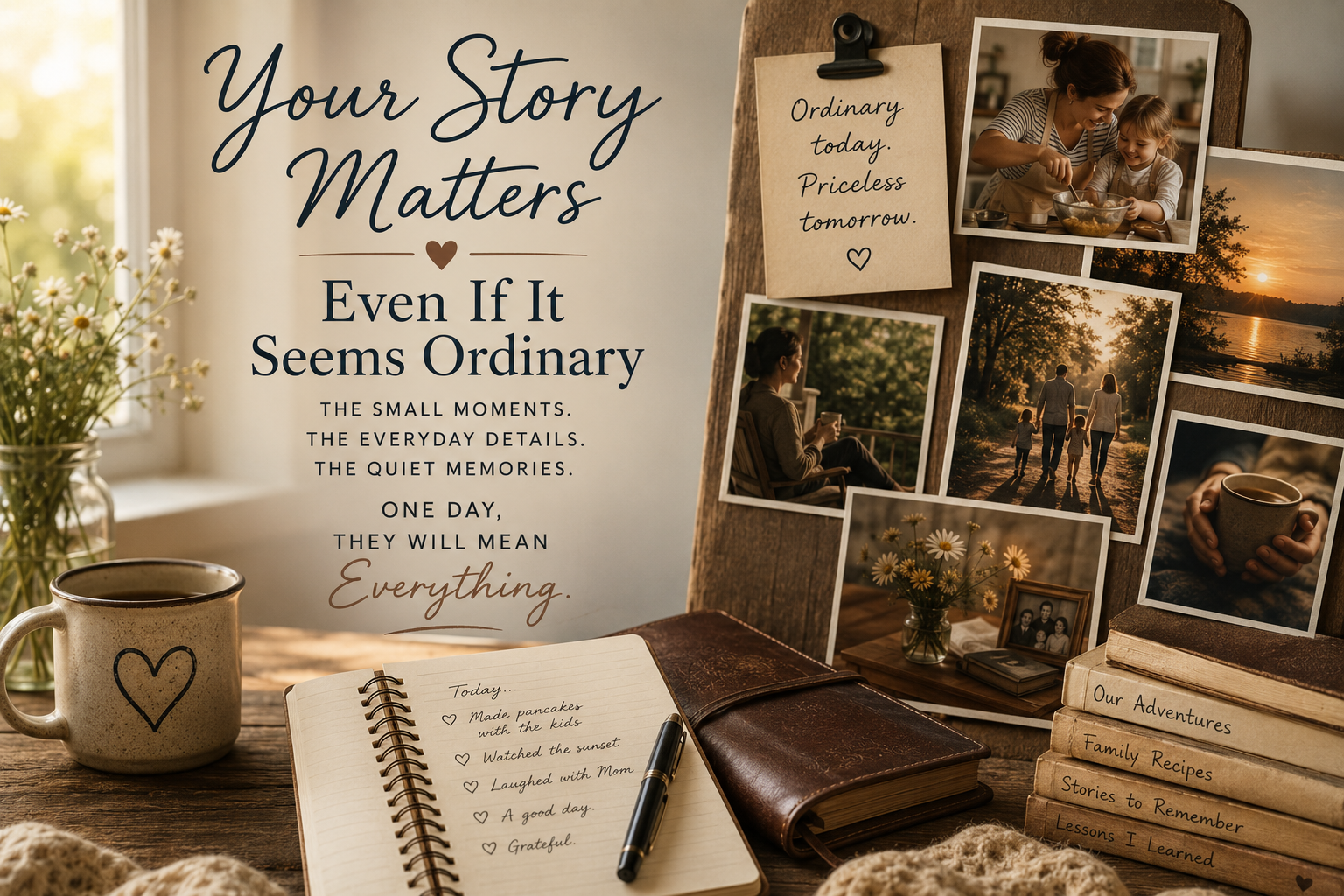
They’ll want to know:
- Did you have a phone?
- What your house smelled like.
- What songs you sang while cooking.
- What family sayings everyone repeated.
- Which traditions made holidays special.
- What the world looked like when you were young.
- What challenges you overcame.
Those small memories become priceless over time.
Let Family History Lead You Into Memoir
If you’re unsure where to begin writing about yourself, start with your genealogy research.
Ask questions like:
- Tell the story behind your oldest family photograph.
- Describe the house where your grandparents lived.
- Write about the first ancestor you truly connected with.
- Explain a family tradition you hope never disappears.
- Describe the first cemetery you visited while researching.
- Tell about a record that changed what you believed about your family.
- Write about what you hope future generations remember about you.
These prompts naturally bridge documented history and personal memory.
You Are Becoming an Ancestor
This may be the most important truth every family historian can remember:
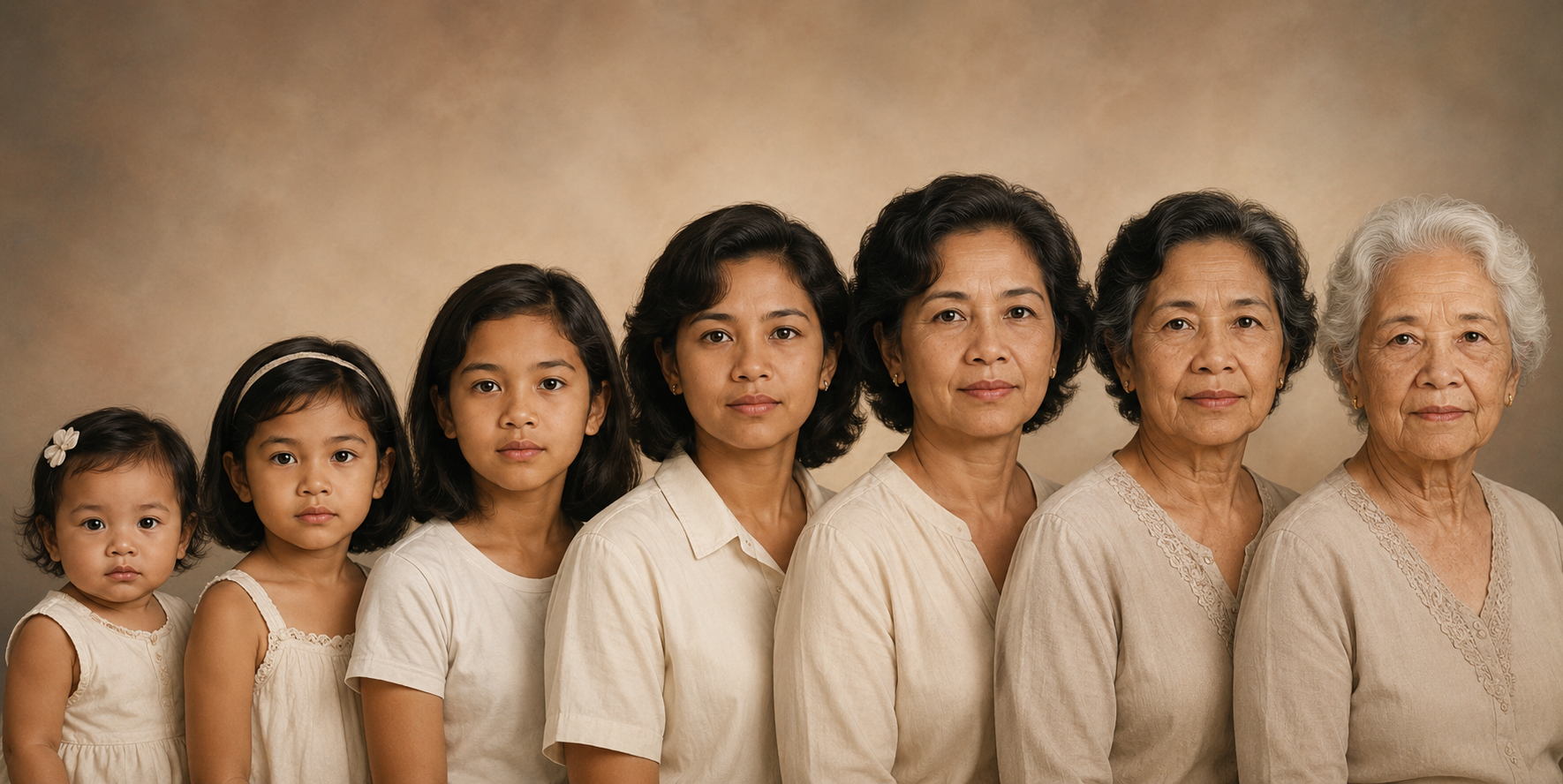
You are someone’s future ancestor. One day, someone may inherit your photographs. They may scan your letters. They may build a family tree with your name in it. They will know when you were born. They may know where you lived. They may even know what work you did.
But unless you write your story…They will never know who you were.
Final Thoughts
Family history gives us names, dates, places, and relationships. Memoir gives those names voices, emotions, and meaning. One preserves the skeleton of a life; the other preserves its heart. The greatest legacy you can leave isn’t just a well-documented family tree; it’s the story of the person who spent a lifetime building it.
Write your family history. Then write yourself into it. Because someday, your memoir will become part of your family’s history.
What story from your own life deserves to be remembered? Choose one memory this week and write it down, not for publication, but for the people who may one day wonder who you really were.
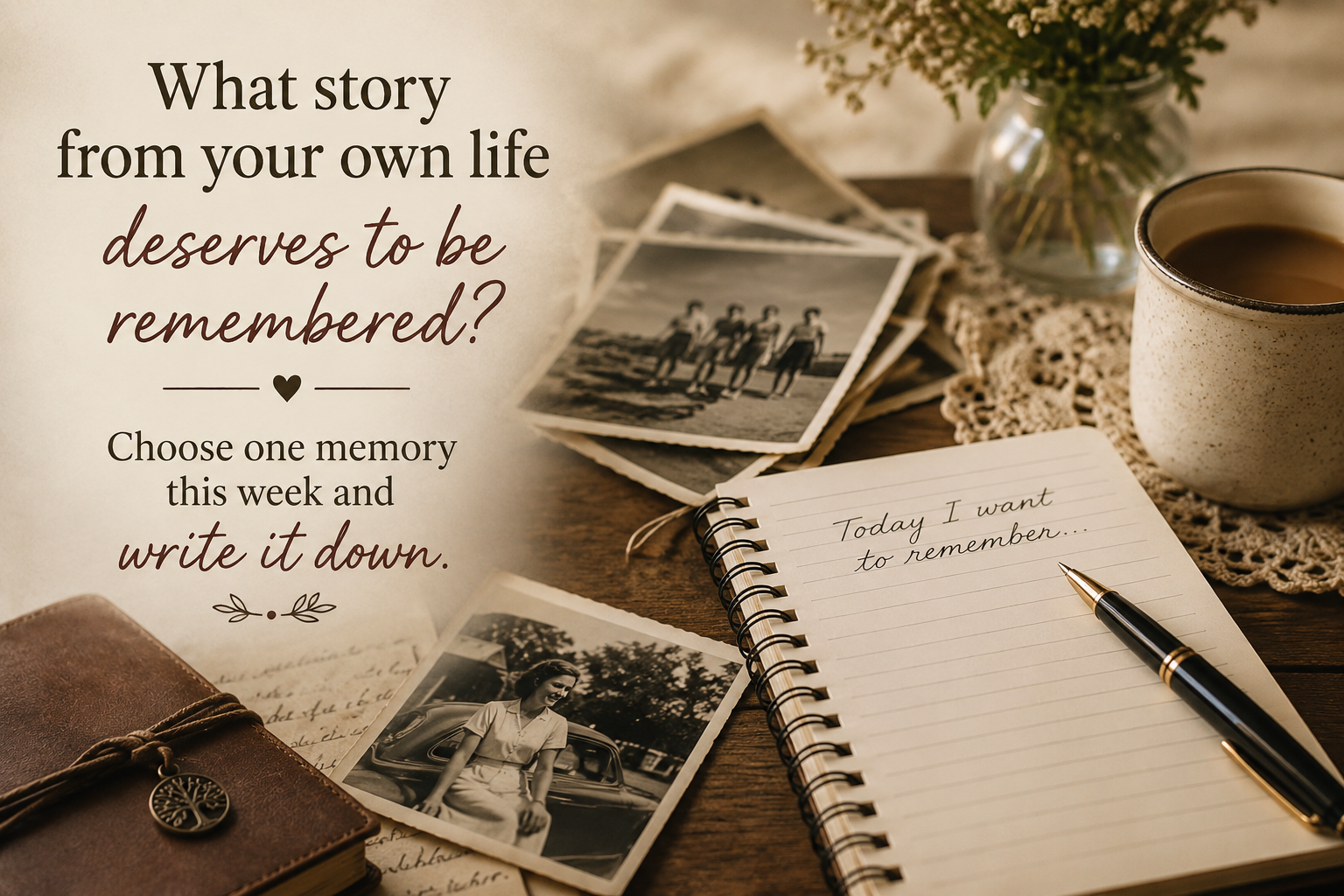
At Lifetales Media, we believe every life has a story worth preserving. Start today, one memory at a time.

IMAGES created by ChatGPT

