
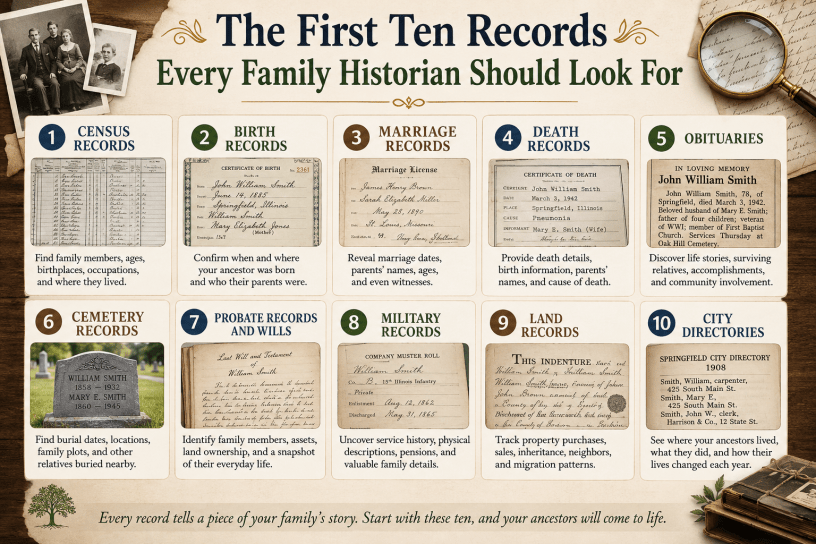
Every family historian starts with questions.
Who were my ancestors? Where did they live? What kind of lives did they lead? Why did they move? What stories have been forgotten?
The good news is that you don’t need to search thousands of records to begin answering these questions. A handful of foundational documents can reveal names, relationships, occupations, migrations, military service, and even glimpses into your ancestors’ personalities.
If you’re just beginning your genealogy journey—or helping someone else get started—these are the first ten records every family historian should search for.
1. Census Records
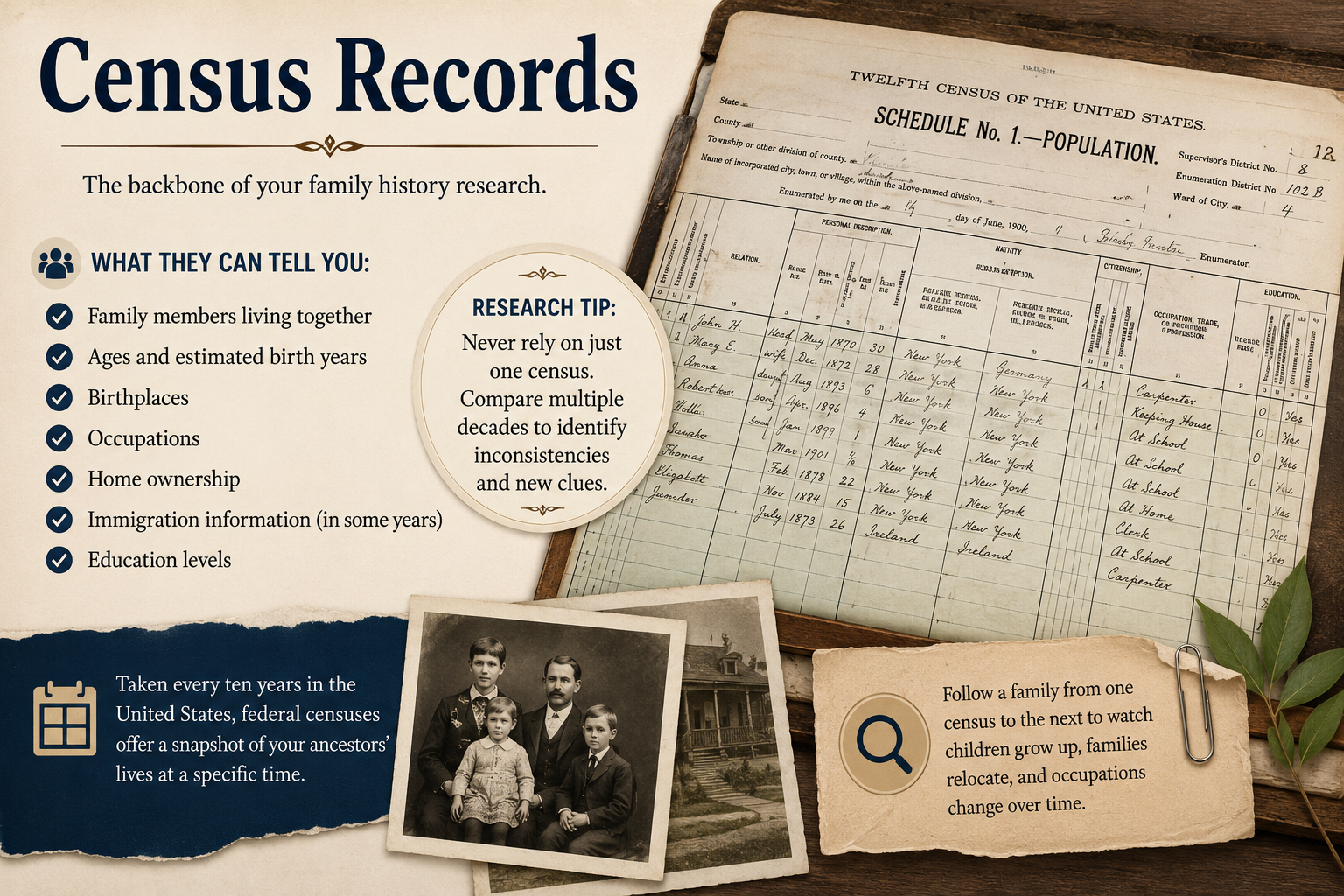
Census records are often the backbone of family history research.
Taken every ten years in the United States, federal censuses can show:
- Family members living together
- Ages and estimated birth years
- Birthplaces
- Occupations
- Home ownership
- Immigration information (in some years)
- Education levels
Following a family from one census to the next allows you to watch children grow up, families relocate, and occupations change over time.
Research Tip: Never rely on just one census. Compare multiple decades to identify inconsistencies and new clues.
2. Birth Records
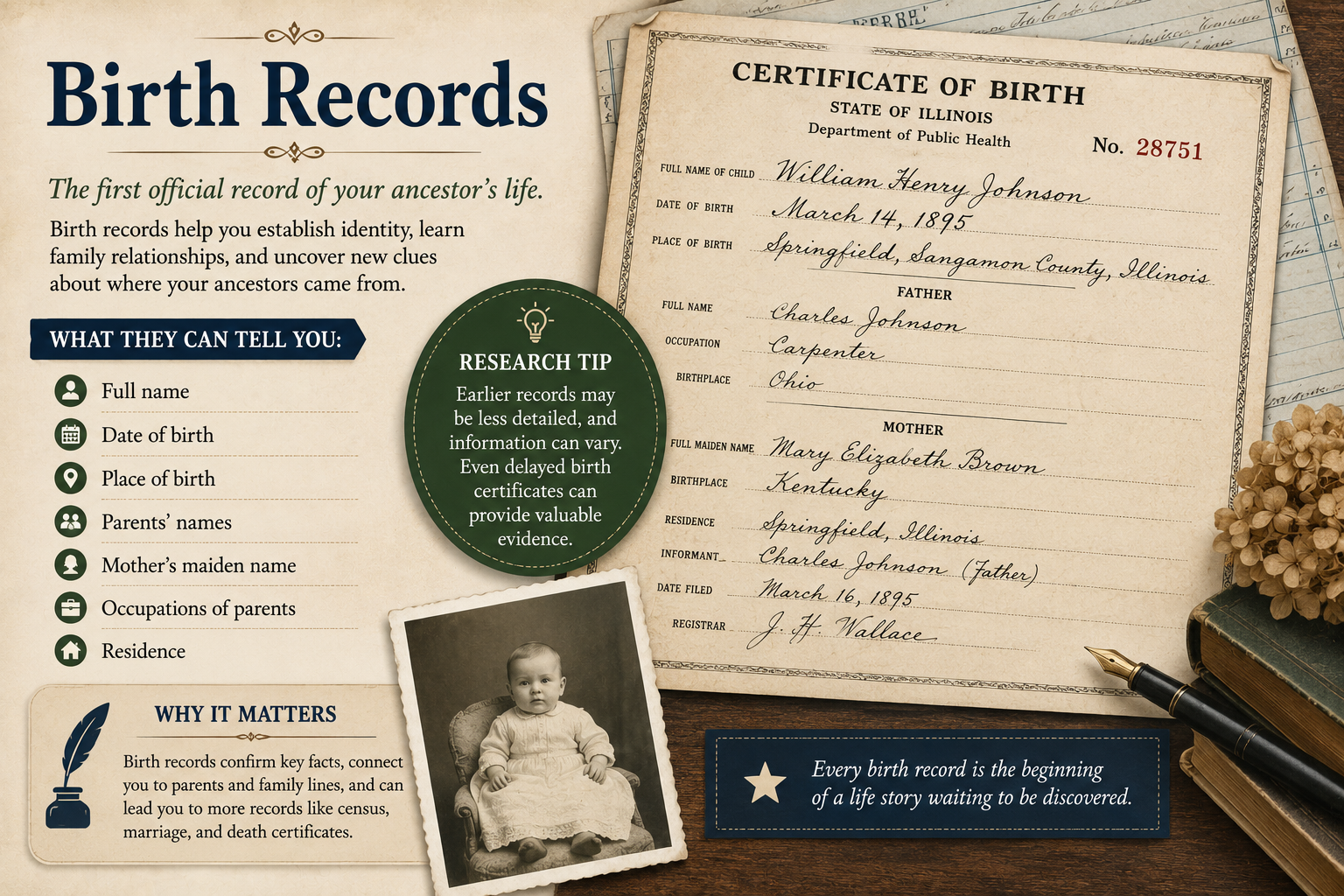
Birth certificates establish one of the most important facts in genealogy—when and where someone entered the world.
They often include:
- Full name
- Date of birth
- Place of birth
- Parents’ names
- Mother’s maiden name
- Occupations of parents
- Residence
Earlier birth records may be less detailed, but even delayed birth certificates can provide valuable evidence.
3. Marriage Records
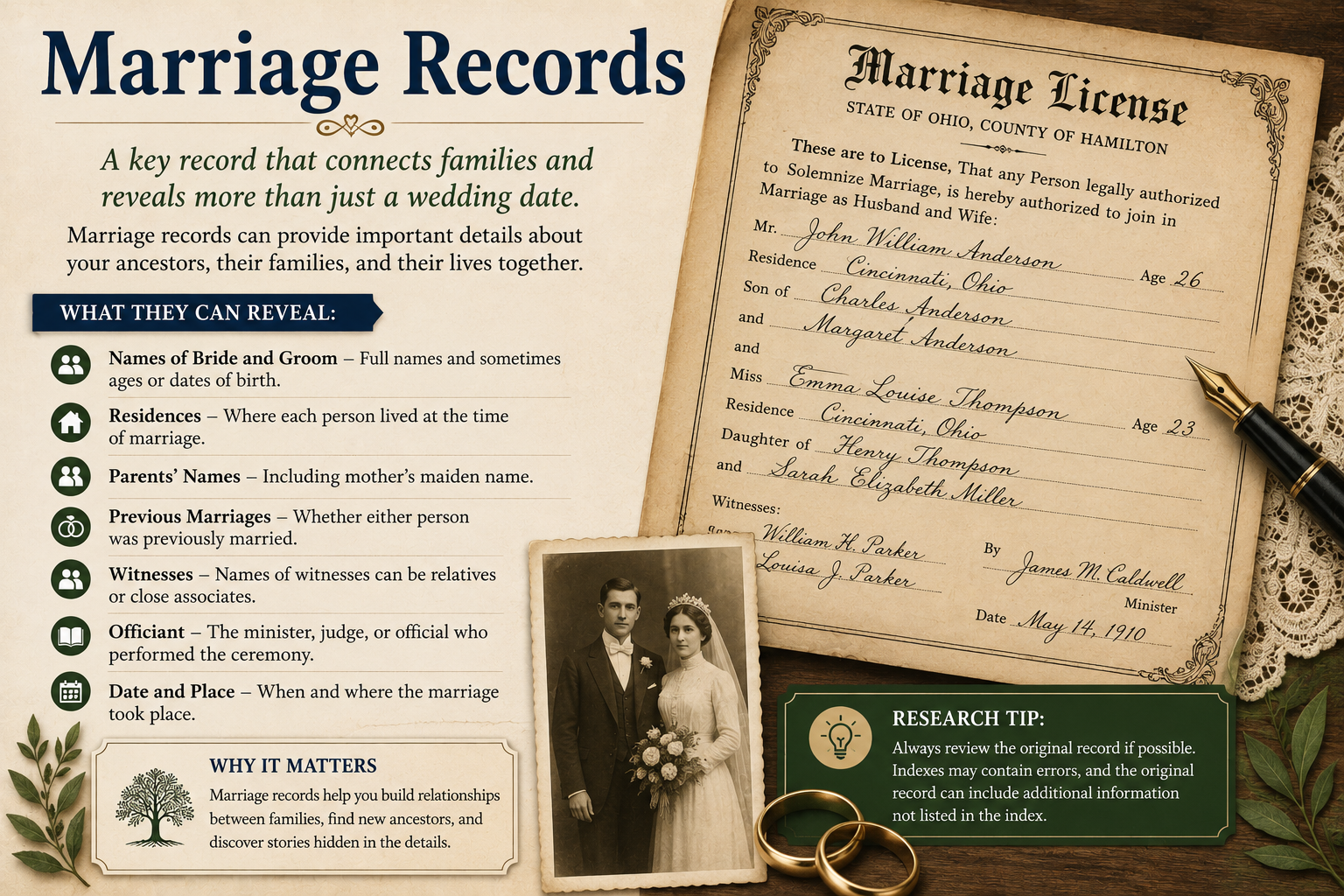
Marriage records do much more than confirm a wedding date.
They frequently reveal:
- Ages of the bride and groom
- Residences
- Parents’ names
- Witnesses
- Ministers or judges
- Previous marriages
Witnesses are especially important—they are often relatives whose relationships aren’t obvious anywhere else.
4. Death Records
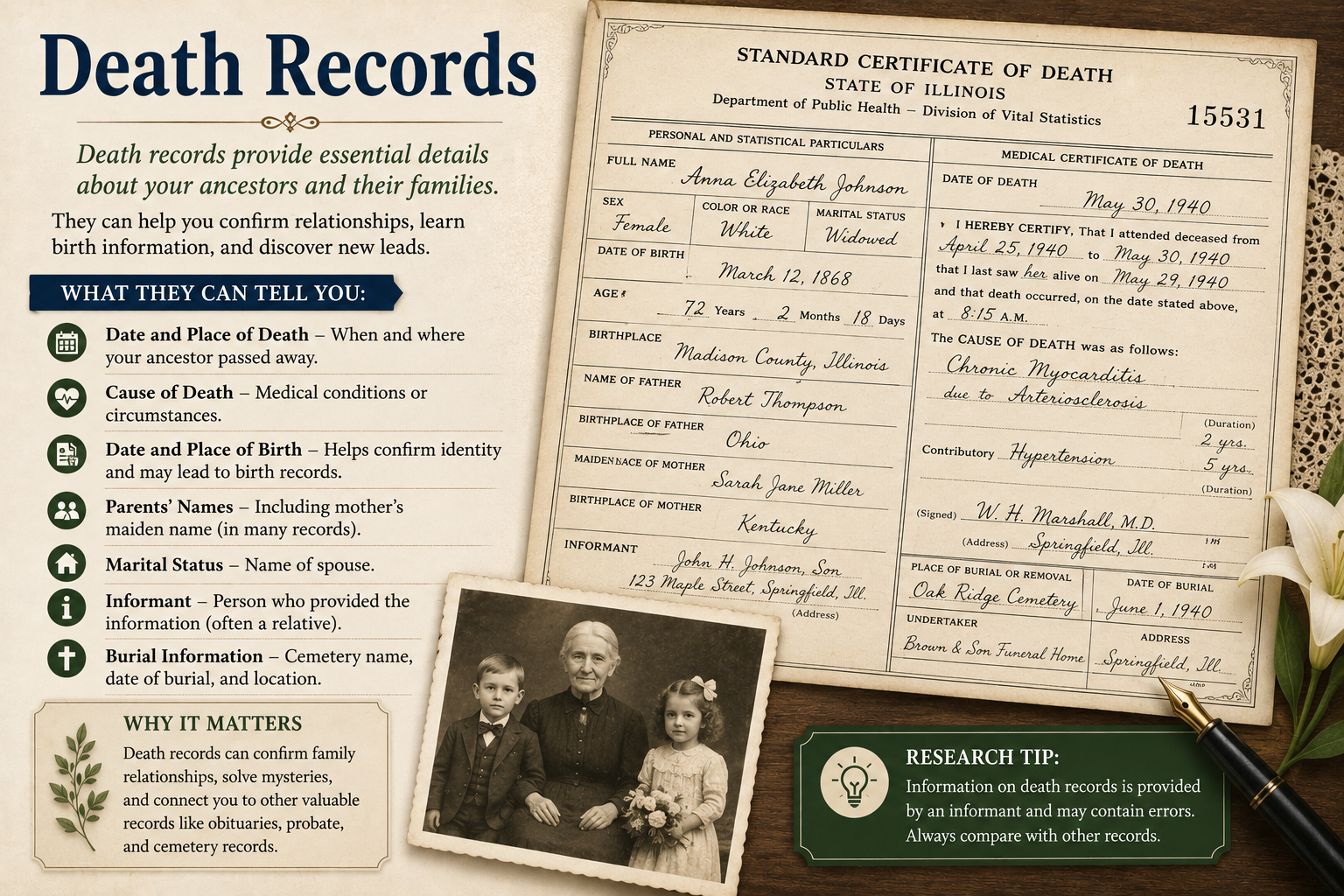
Death certificates can unlock several generations of family history.
Depending on the time period, they may include:
- Date and place of death
- Cause of death
- Birth information
- Parents’ names
- Burial location
- Informant (often a spouse or child)
Remember that information supplied by an informant may contain mistakes, especially regarding parents or birthplaces.
5. Obituaries
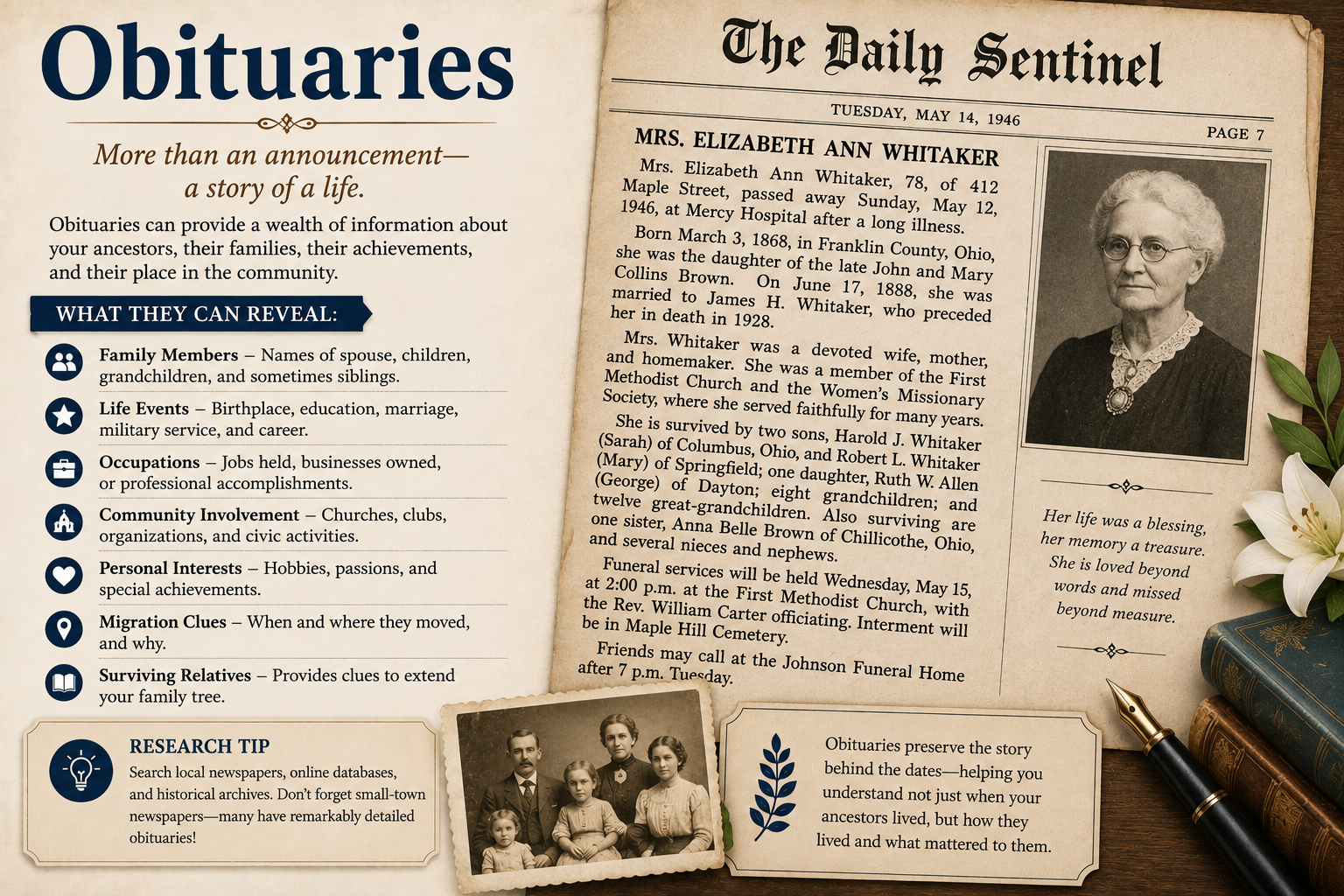
Obituaries often tell the story behind the dates.
Besides announcing a death, they may list:
- Surviving relatives
- Military service
- Occupations
- Church memberships
- Community involvement
- Hobbies
- Immigration stories
Older newspapers frequently include remarkably detailed life summaries.
6. Cemetery Records
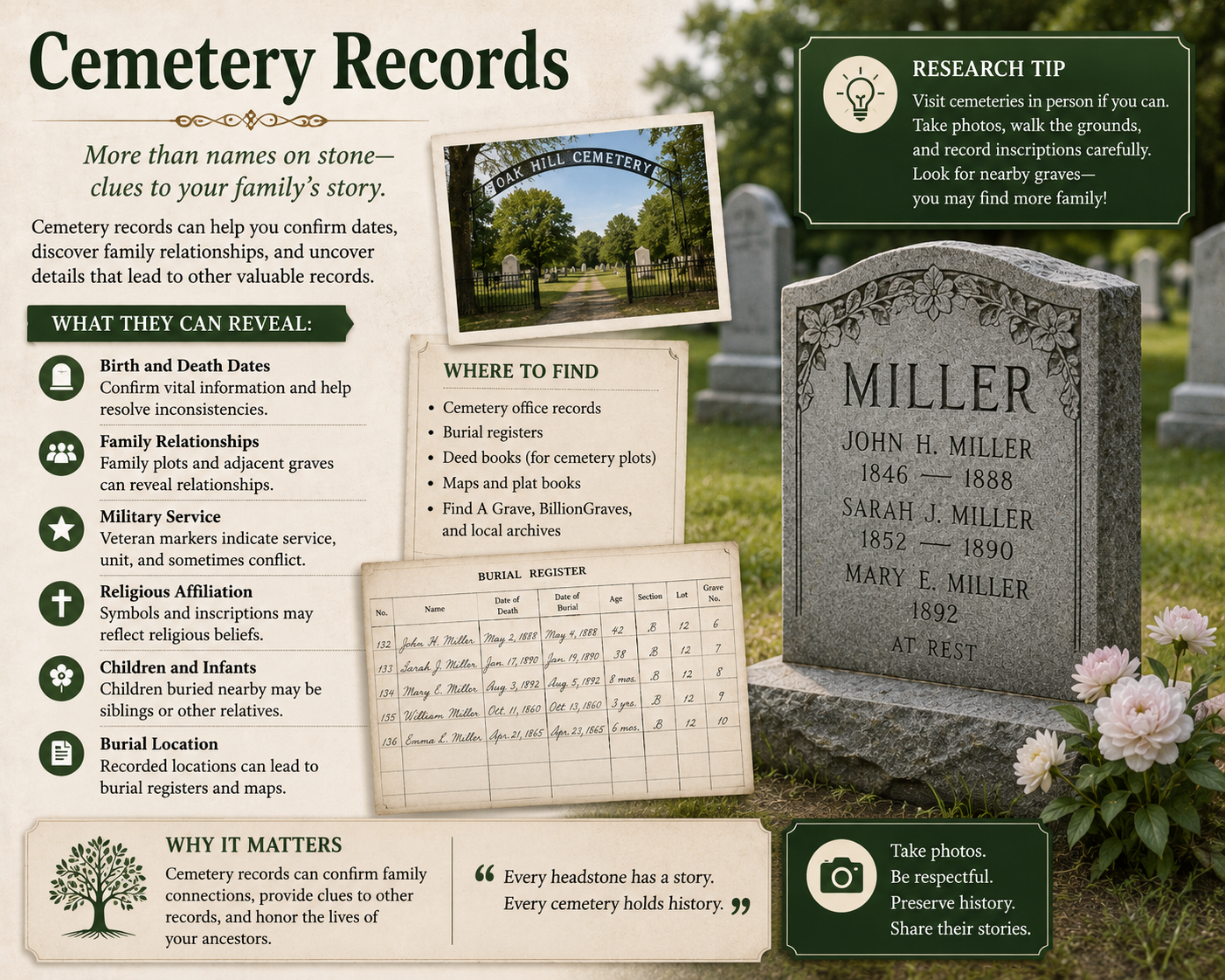
Gravestones can reveal more than many people expect.
Look for:
- Birth and death dates
- Family plots
- Military markers
- Religious symbols
- Children’s graves nearby
Many cemeteries also maintain burial registers that include additional details not found on the stone itself.
Photograph nearby graves as well—you may discover relatives buried together.
7. Probate Records and Wills
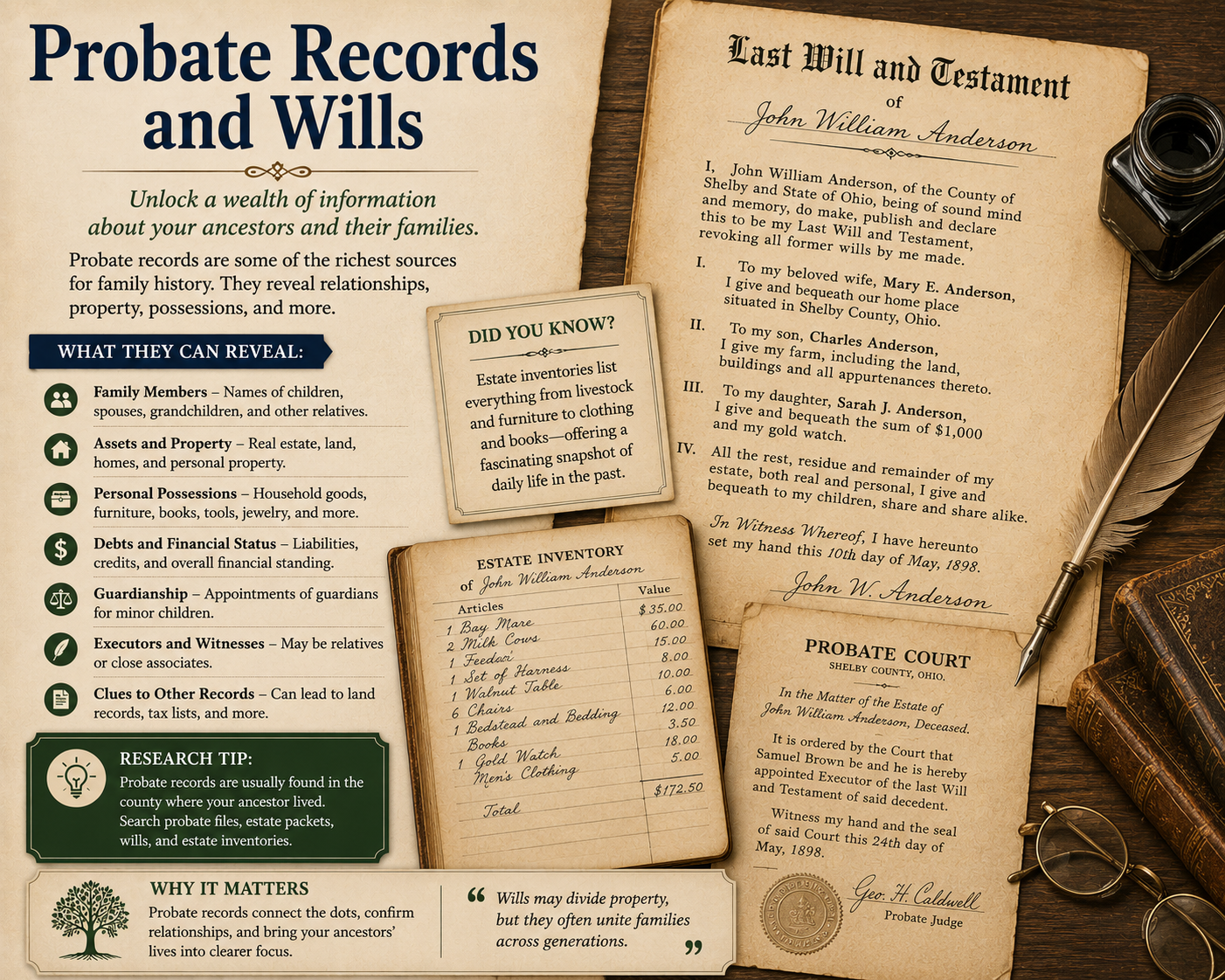
One of genealogy’s best-kept secrets is the probate file.
These records can identify:
- Children
- Married daughters
- Grandchildren
- Siblings
- Land ownership
- Personal possessions
- Financial status
Estate inventories are particularly fascinating because they offer a snapshot of daily life, listing everything from livestock and furniture to books and family heirlooms.
8. Military Records
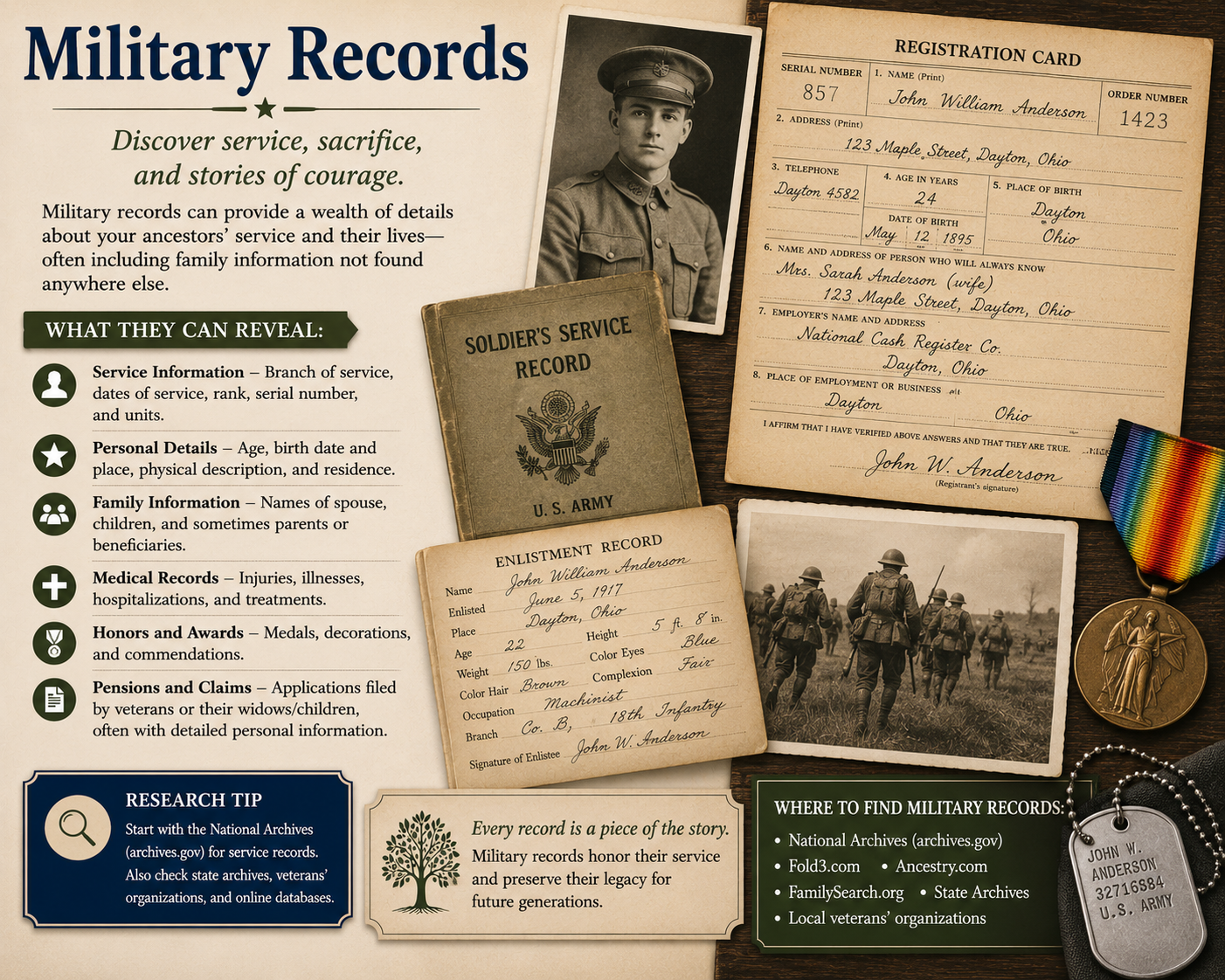
Military records can provide extraordinary detail.
Depending on the conflict and record type, you may find:
- Physical descriptions
- Service history
- Pension applications
- Widow’s claims
- Children’s names
- Residences
- Medical information
Pension files, especially from the Civil War, often contain dozens or even hundreds of pages documenting an ancestor’s life.
9. Land Records
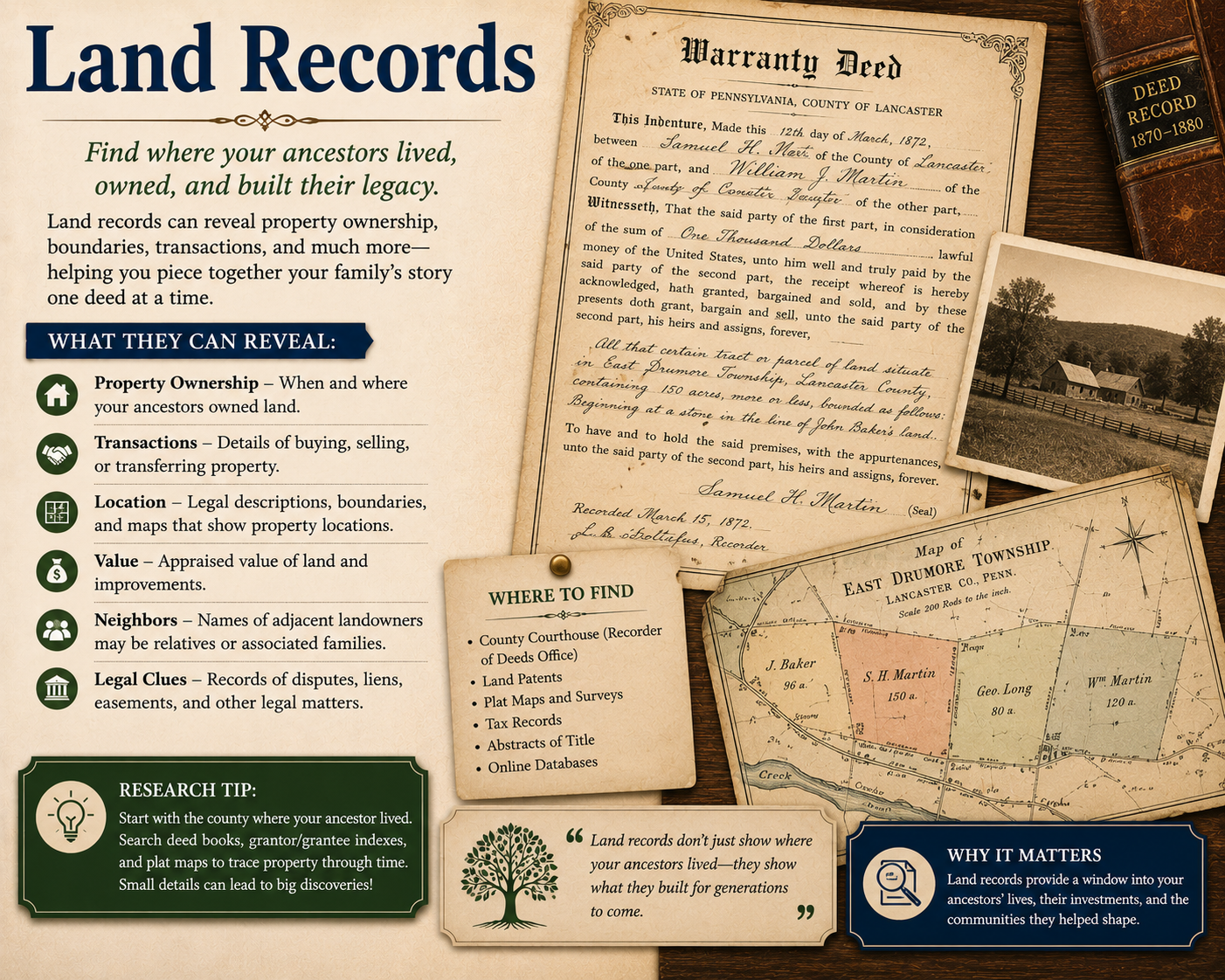
People often moved because they bought, sold, or inherited land.
Land records may reveal:
- Family relationships
- Migration patterns
- Financial circumstances
- Neighbors
- Property boundaries
Neighbors frequently turn out to be extended family members, making land records invaluable for solving difficult genealogy problems.
10. City Directories
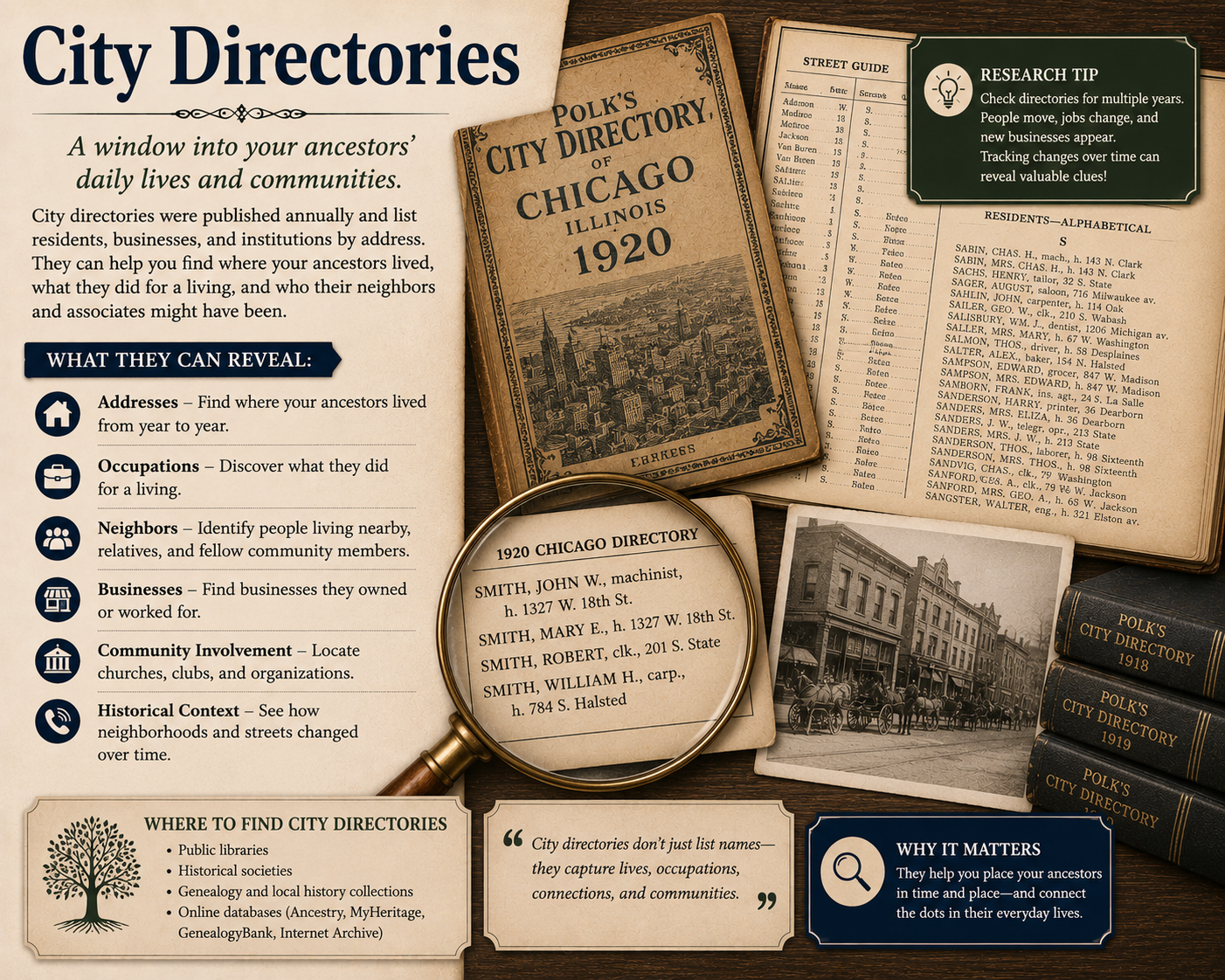
Think of city directories as annual snapshots between census years.
They often list:
- Occupation
- Address
- Employer
- Spouse
- Business advertisements
By following a family through yearly directories, you can pinpoint exactly when they moved or when someone died.
Bonus: Don’t Forget Family Records
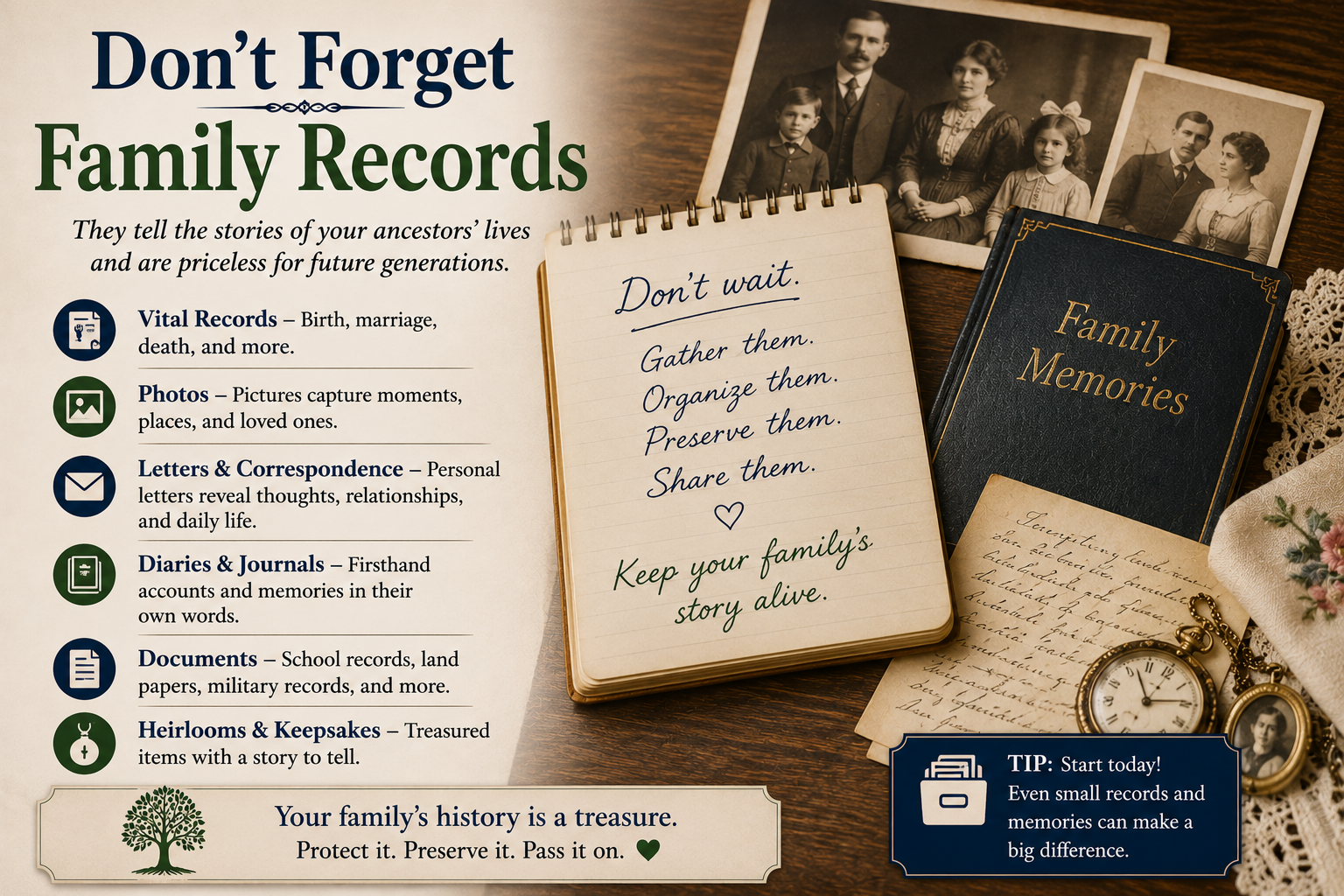
Some of the most valuable records aren’t in archives—they’re in someone’s attic.
Look for:
- Family Bibles
- Letters
- Diaries
- Photographs
- Recipe books
- School report cards
- Funeral cards
- Military discharge papers
- Scrapbooks
These personal treasures provide the stories that official records often cannot.
Start with What You Know
One of the biggest mistakes beginners make is immediately searching for famous ancestors or distant generations.
Instead:
- Begin with yourself.
- Document your parents.
- Then your grandparents.
- Work backward one generation at a time.
Each document should lead naturally to the next. Good genealogy isn’t about collecting names—it’s about building evidence.
Final Thoughts
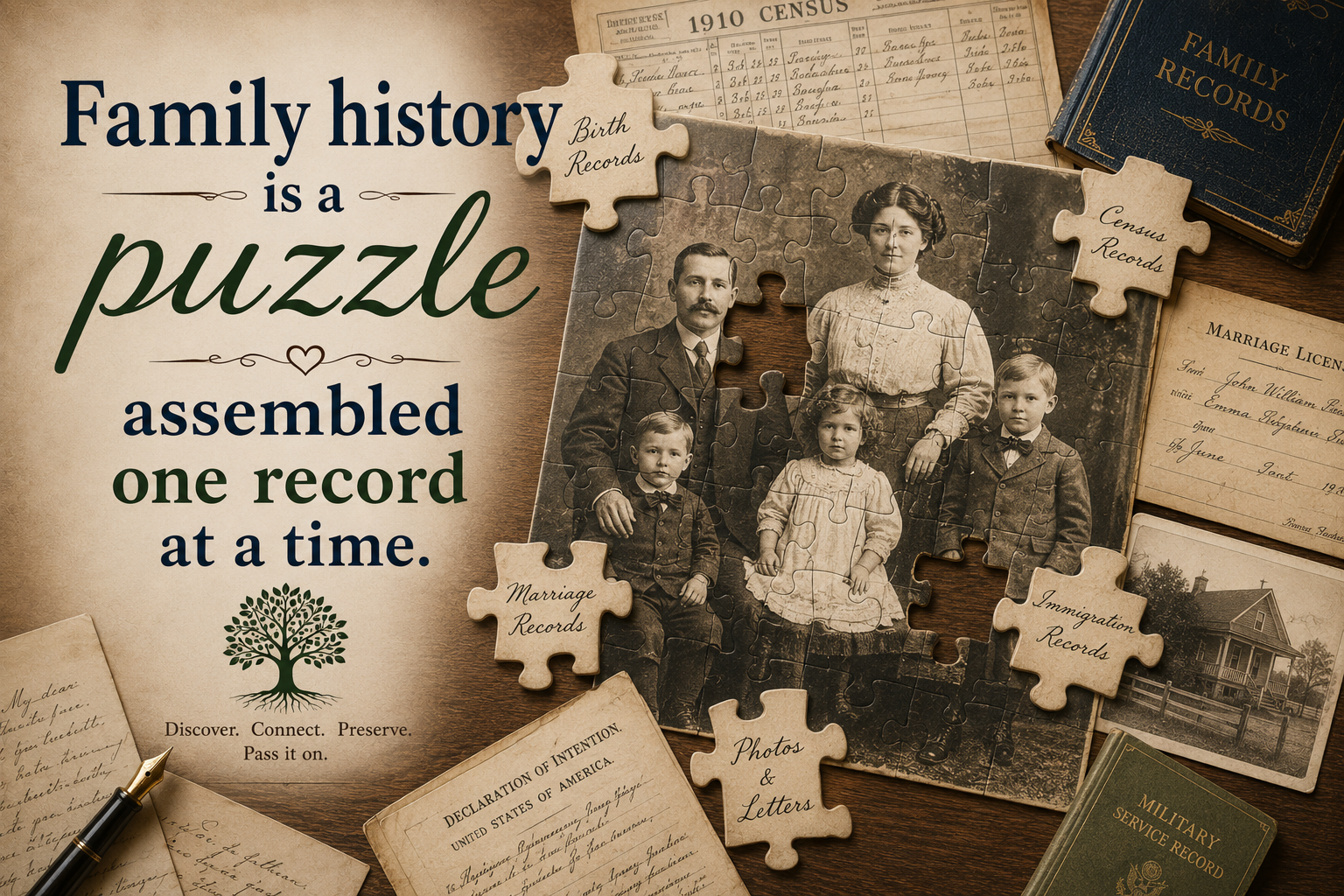
Family history is a puzzle assembled one record at a time. Every birth certificate, census page, land deed, and obituary adds another piece to the picture of your ancestors’ lives.
The goal isn’t simply to build a family tree. It’s to understand the people behind the names—their struggles, triumphs, migrations, occupations, and relationships. Those records become the foundation for preserving stories that might otherwise be lost.
If you’re just beginning, don’t feel overwhelmed. Start with these ten essential record types, and let each discovery guide you to the next. Before long, you’ll find that every document opens another door into your family’s past—and every ancestor has a story waiting to be told.
Have you found a record that completely changed your understanding of your family history?
Share your favorite genealogy discovery in the comments; we’d love to hear your story!
 Lifetales Media