
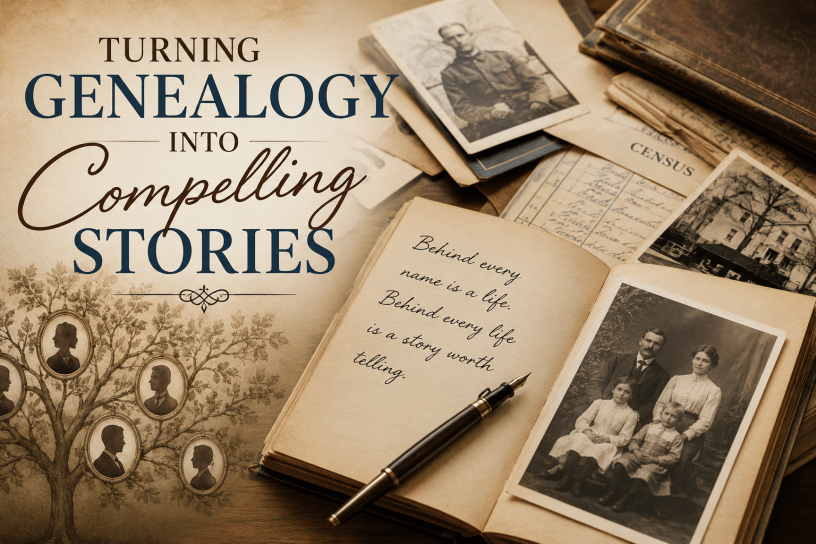
Every family tree contains a thousand stories waiting to be told.
Many people begin genealogy by collecting names, dates, and places. They carefully document births, marriages, deaths, and census records. While these facts form the foundation of family history, they are only the beginning.
Genealogy tells us who our ancestors were.
Storytelling helps us understand who they became.
Every Record Hints at a Story
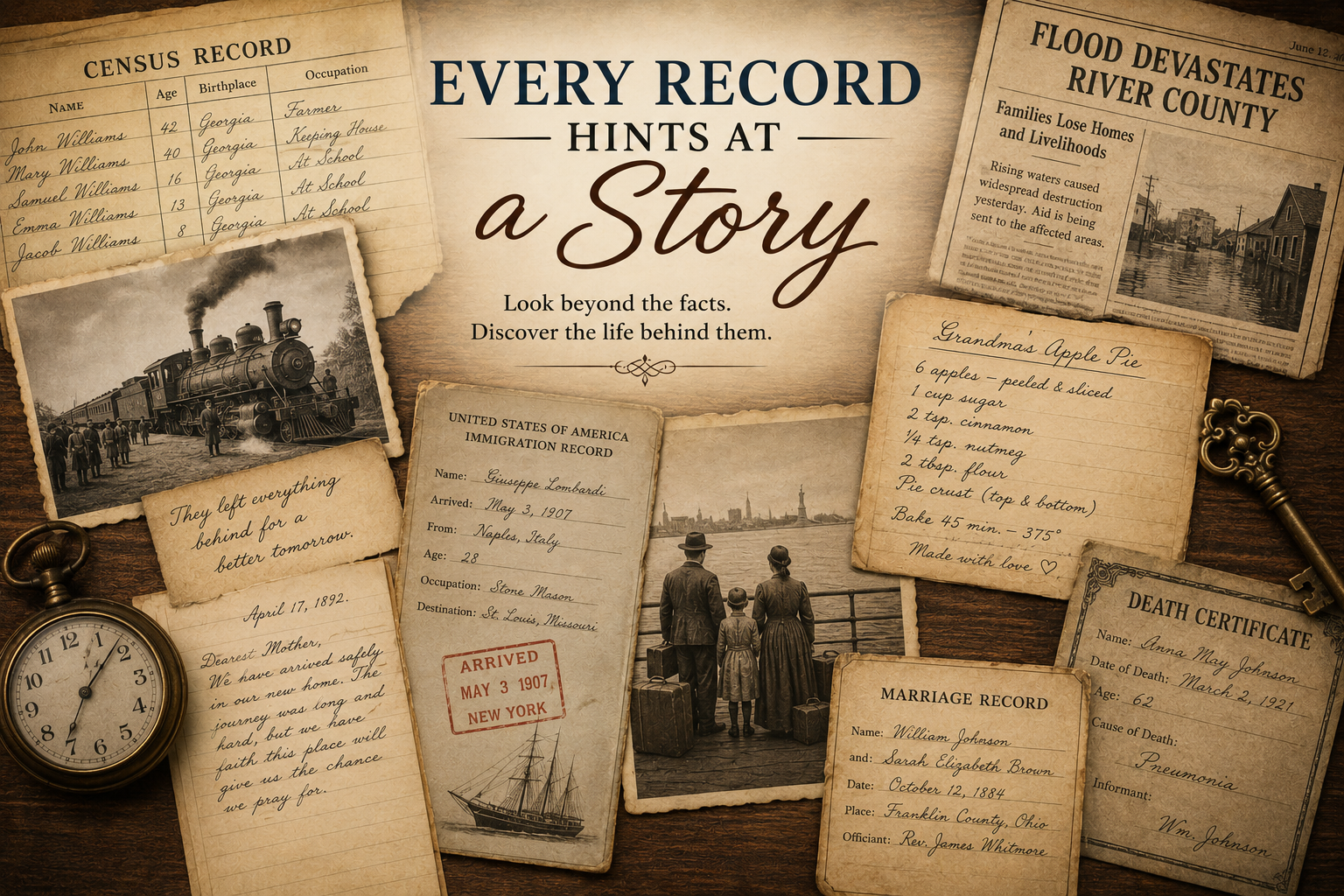
Imagine finding a census record showing a family moved from Georgia to Florida between 1880 and 1900.
The genealogy tells you what happened.
The story asks:
- Why did they leave?
- What did they hope to find?
- What were they willing to risk?
- What did they leave behind?
Perhaps they came for work in the timber industry. Maybe they sought farmland, escaped disease, or followed relatives already living there. Every document opens the door to questions that transform dry facts into living history.
Look Beyond the Dates
A death certificate tells us when someone died.
An obituary tells us how they were remembered.
A military pension file may reveal years of hardship after a war.
A probate record can expose family conflicts that never appeared in public.
A newspaper article might describe a flood, fire, hurricane, or epidemic that forever changed a family’s future.
The best family stories emerge when multiple records are woven together into a narrative.
Build the World Your Ancestors Lived In
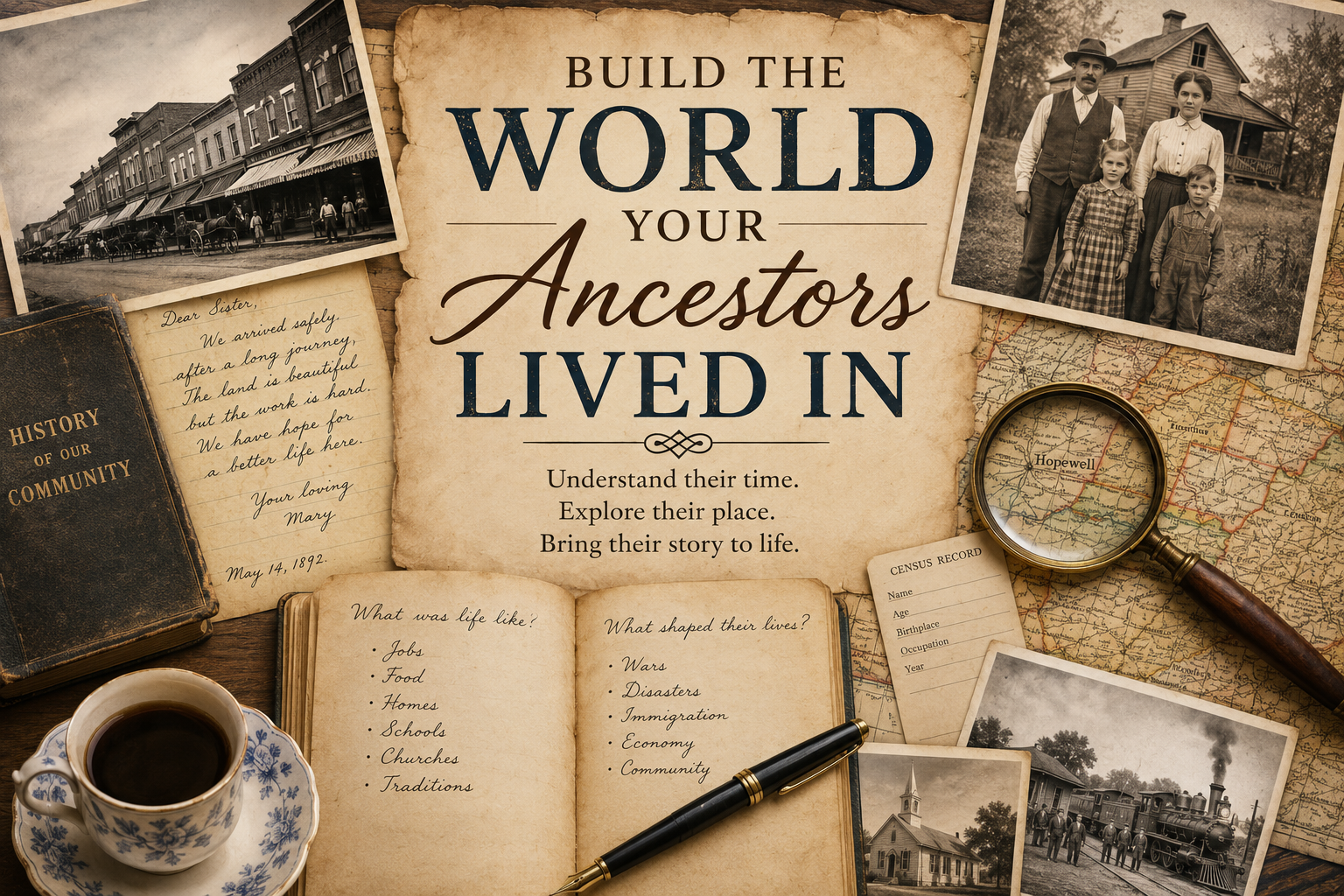
Your ancestor never lived in isolation.
Ask yourself:
- What was happening in their town?
- What major historical events shaped their lives?
- What jobs were available?
- What diseases threatened families?
- What transportation existed?
- What churches, schools, or communities surrounded them?
A woman listed simply as a “housekeeper” in the census may have spent sixteen-hour days cooking over wood fires, hauling water, sewing clothing, preserving food, and raising children without electricity or running water.
Context transforms ordinary lives into extraordinary stories.
Follow the Emotional Journey
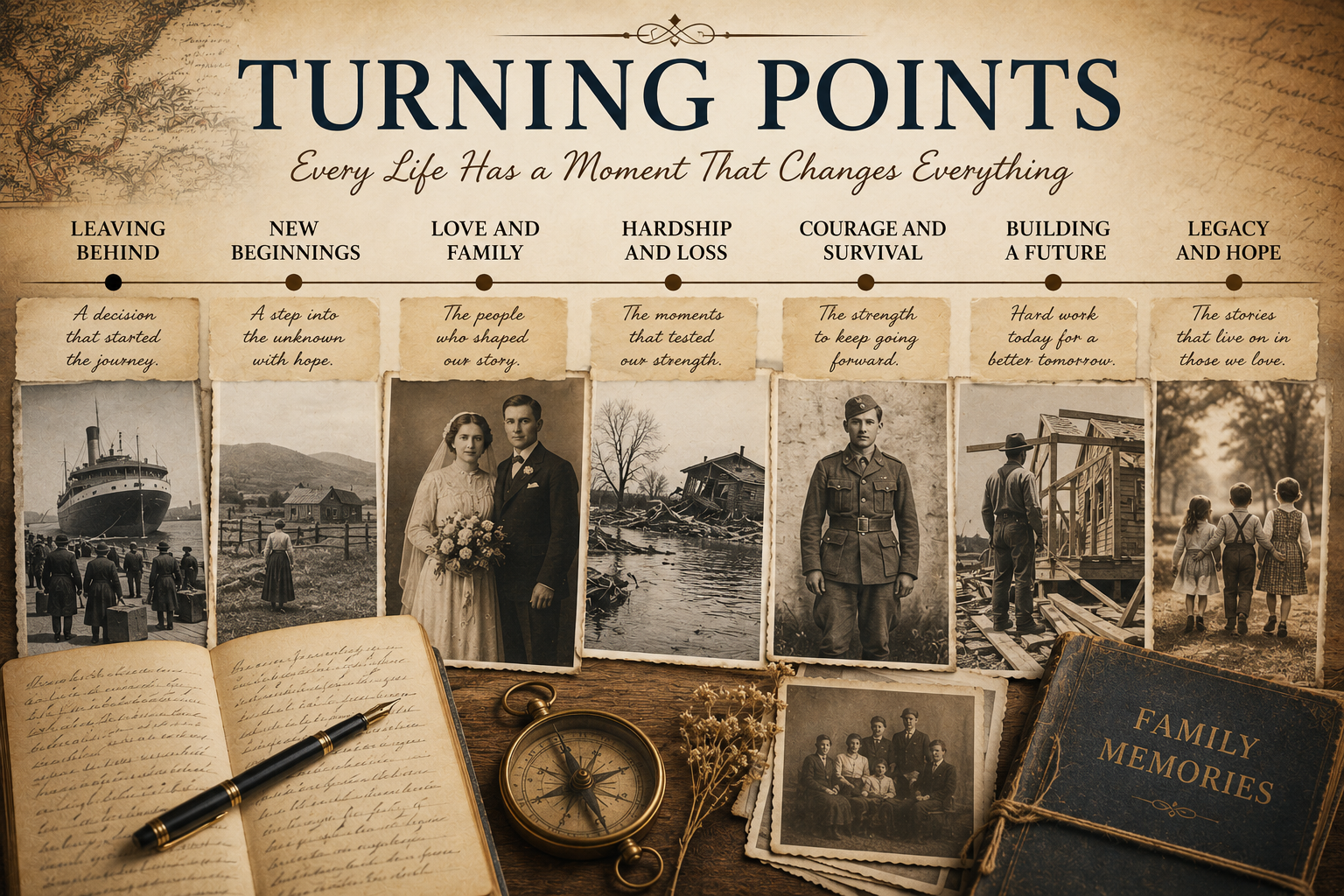
Every life contains turning points.
Think about moments such as:
- Immigration
- Military service
- Marriage
- Loss of a child
- Economic hardship
- Natural disasters
- Starting a business
- Crossing an ocean
- Surviving war
- Beginning life in a new community
Instead of listing these events chronologically, consider how each one changed the person’s life.
Ask:
- What fears might they have carried?
- What gave them hope?
- What sacrifices did they make?
- What dreams kept them moving forward?
While we should never invent facts, we can thoughtfully explore the human experiences suggested by the historical record.
Let Your Ancestors Speak
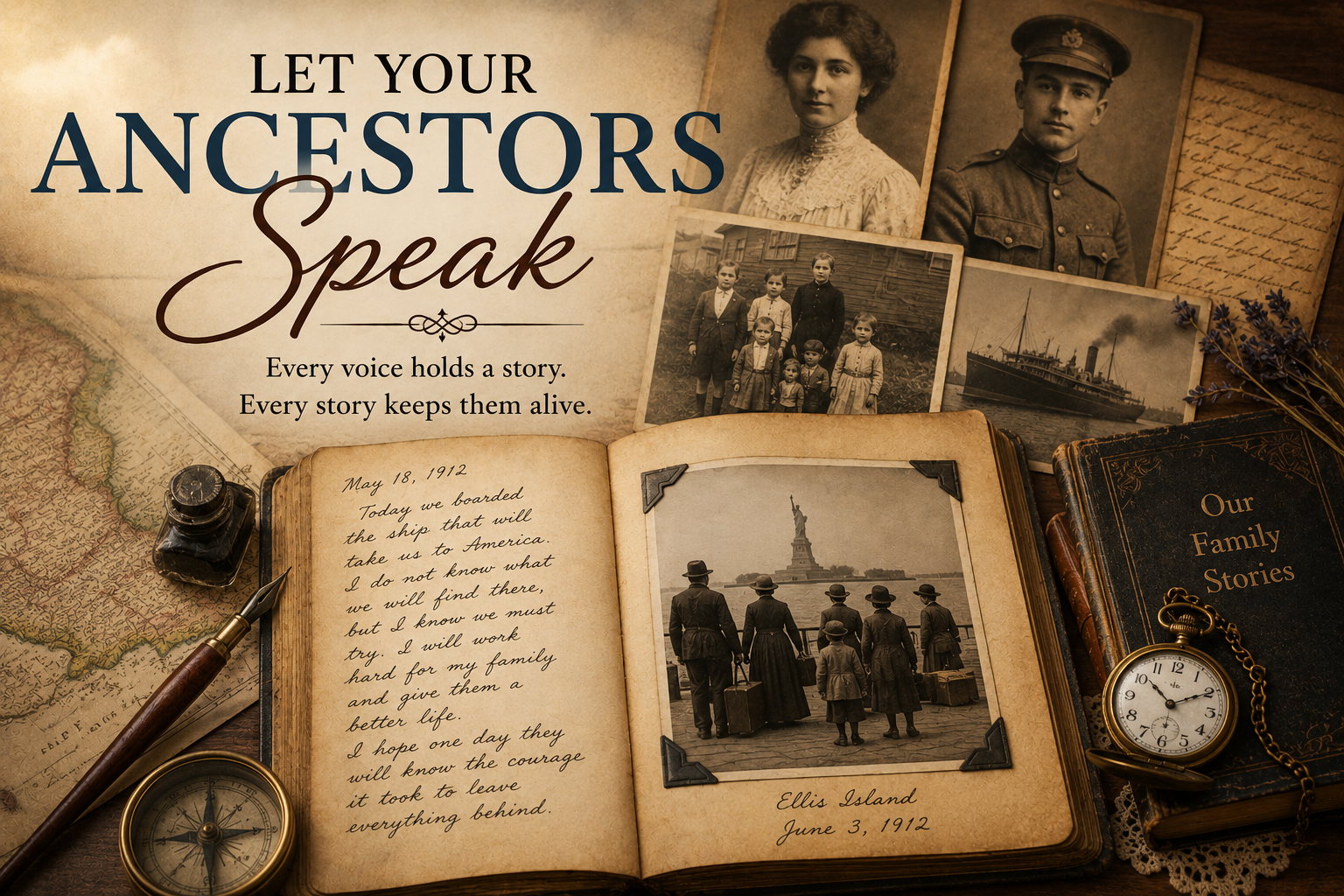
One effective way to write family history is to imagine your ancestor telling the story in their own voice.
For example:
I had never seen the ocean before boarding the ship. My mother cried as the shoreline disappeared behind us. I wondered if I would ever see home again.
This style creates an emotional connection for readers while remaining grounded in documented historical events and clearly identified historical context.
If writing in the first person, distinguish between documented facts and informed interpretation so future researchers understand what is supported by evidence.
Show, Don’t Simply Tell
Instead of writing:
John moved to Florida in 1888.
Try writing:
In the spring of 1888, John packed everything his family owned into a wagon. The road south was rough, but the promise of fertile land and opportunity outweighed the uncertainty ahead. Behind him lay generations of familiar fields. Ahead waited a future no map could guarantee.
Readers remember scenes far more than timelines.
Preserve Ordinary Lives
History books often celebrate politicians, generals, and famous inventors.
Genealogy reminds us that history was also built by:
- Farmers
- Midwives
- Teachers
- Fishermen
- Shopkeepers
- Seamstresses
- Cigar makers
- Railroad workers
- Homemakers
Their stories deserve to be preserved just as much as those of presidents and generals. Often, these everyday lives are the ones our descendants most long to understand.
Write for the Next Generation
Imagine your great-grandchild opening your family history one hundred years from now.
Would they rather read:
“James Hamilton was born in 1872.”
Or:
“James Hamilton crossed the state line with little more than hope and determination. He built a home from pine logs, planted his first crop by hand, and believed that education would give his children opportunities he never had.”
Facts are essential. Stories make those facts unforgettable.
Every Family Has Stories Worth Telling
You don’t need famous ancestors to write compelling family history. You simply need curiosity.
Ask questions. Study the records. Research the historical context.
Then connect the pieces with careful, evidence-based storytelling.
Because long after names and dates fade from memory, people will remember the stories. And that may be the greatest gift genealogy can leave behind.
Final Thoughts
Genealogy is more than discovering where we came from—it is discovering who our ancestors were as people. Every document is a clue, every photograph a doorway, and every family story another thread in the tapestry of history. When we combine careful research with thoughtful storytelling, we preserve not only our ancestors’ lives but also the wisdom, resilience, and humanity they passed down to us.
At LifeTales Media, we believe that preserving history is about more than building family trees—it’s about bringing those branches to life, one story at a time.

