By Karen Yvonne Hamilton | Lifetales Media
Someday, someone in your family may hold an old photograph and wonder who is standing beside the porch. They may recognize a grandmother’s handwriting on a recipe card but know nothing about the kitchen where she used it. They may wish they had asked one more question while there was still someone who could answer.
A legacy book gives those future readers a place to begin. It gathers memories, family stories, photographs, and reflections into something they can open, read, and pass along. You do not need a remarkable life or a complete family archive to create one. You need a few stories you are willing to preserve and a manageable way to start.
What belongs in a legacy book
A legacy book can tell the story of one person, a couple, a family, or a place that shaped several generations. It might be a short collection of memories, a photograph book with substantial captions, or a longer narrative supported by family records.
Its purpose is to help readers know the people behind the names. A marriage date establishes when a couple married. The story of how they met, what they worried about, and how they built a household helps descendants understand the life that followed.
Include the details your family might otherwise lose: a familiar expression, the work someone did, a holiday ritual, the reason for a move, or the story behind a treasured object. Ordinary details often answer questions that official records never address.
Types of legacy books
People can create a legacy book around a whole life, one relationship, a meaningful place, or a collection of everyday memories. Here are some possibilities:
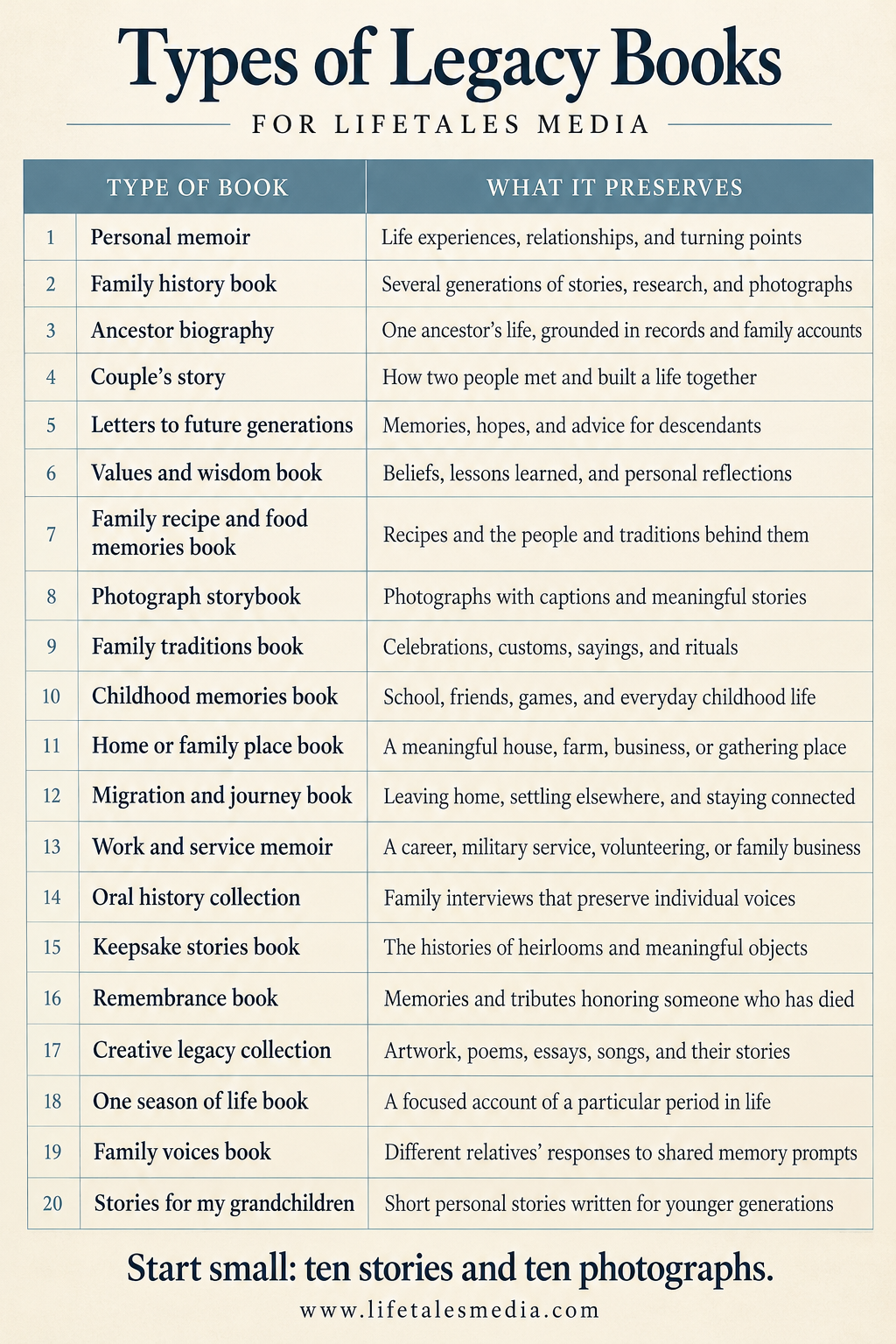
A first legacy book might contain just ten stories and ten photographs, a manageable collection that leaves room for another volume.
Choose one reader and one starting point
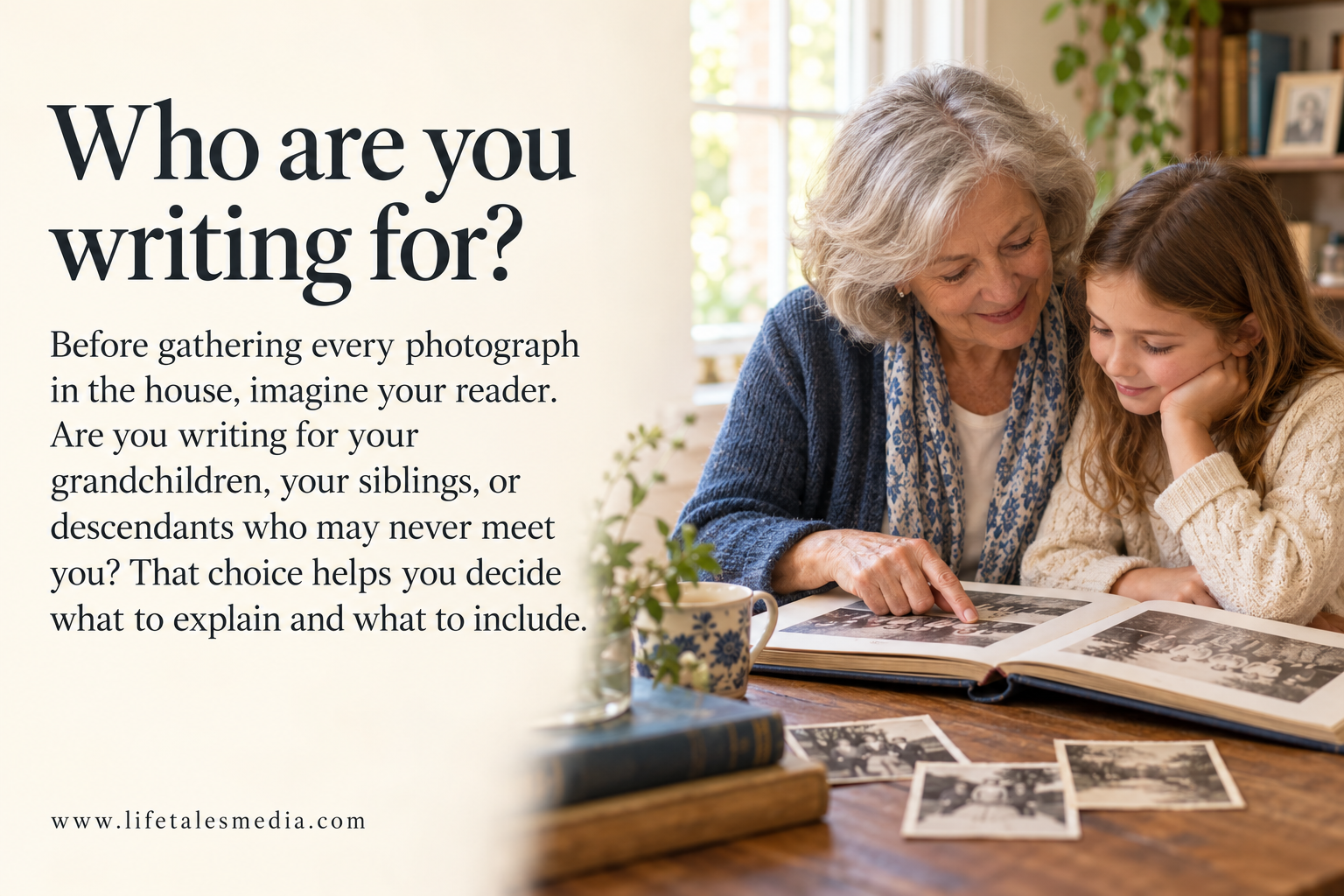
Before gathering every photograph in the house, imagine your reader. Are you writing for your grandchildren, your siblings, or descendants who may never meet you? That choice helps you decide what to explain and what to include.
Then give the first book a clear boundary. You might focus on growing up in one town, your parents’ early years together, or ten memories you want your grandchildren to have. A small, finished book can become the first volume of a larger project.
Write a simple purpose statement: “I am making this book so my grandchildren will know what life was like in the house where I grew up.” Keep it nearby when the project begins to expand.
Gather the material and preserve its context
Begin with what you already have: photographs, letters, recipes, journals, school papers, and documents. Make a simple list of the people, places, and events each item could help you describe. You can fill gaps later; collecting does not have to delay writing.
Ask relatives specific questions. “What happened on your first day at work?” often gives someone more to work with than “Tell me about your life.” Ask permission before recording, and label each interview with the speaker’s name and the date.
Keep a source note as you go. Record who told a story, where a document came from, and which details remain uncertain. For a photograph, identify people from left to right when possible and include the location and approximate date. Explain relationships using names rather than labels such as “Aunt Mary,” whose meaning may be unclear to a later reader.
Turn memories into stories
Choose one moment and stay with it long enough to help the reader understand what happened. Where were you? What were you trying to do? What made that day different? What did you understand afterward that you had not understood before?
Instead of writing only “My mother was resourceful,” describe a remembered occasion when she made something work with what she had. Let her actions carry the meaning.
Use concrete details you actually remember or can support. You do not need to invent dialogue, weather, or private thoughts to make a story engaging. When exact words are lost, summarize the conversation. When a detail is uncertain, say so. Your natural voice and an honest account will give the book its character.
Leave room for different memories
Family members may remember the same event differently. You can acknowledge those differences without forcing agreement: “I remember leaving in the spring; my sister places the move later that summer.” Check dates against records where possible, and distinguish family tradition from documented information.
Difficult experiences may belong in the book, but consider what each detail helps future readers understand. Describe your own experience carefully, avoid claiming to know someone else’s motives, and discuss sensitive contributions with the people who shared them. A version intended for close family may need different choices from one offered to the public.
Arrange the book so readers can find their way
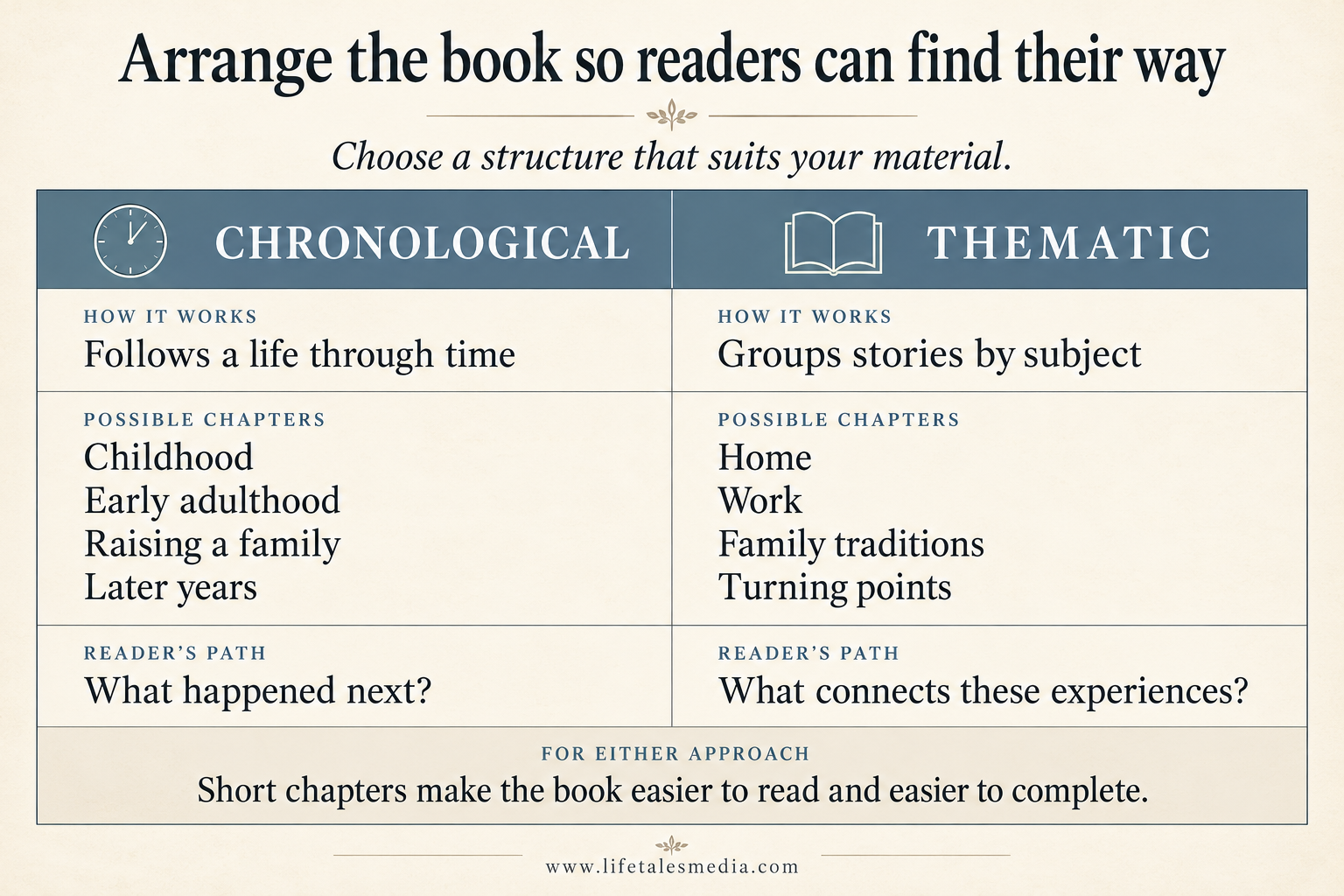
Choose a structure that suits the material. A chronological book follows a life through time. A thematic book might group stories around home, work, family traditions, and turning points. Short chapters make either approach easier to read and easier to complete.
Add a brief introduction explaining whose stories the book contains and why you collected them. A simple family tree or timeline can help readers follow unfamiliar names. Place photographs near the stories they illuminate, give them readable captions, and include source notes at the end.
Before printing several copies, ask a trusted reader to flag confusing relationships, missing explanations, and errors. Review a sample copy for readable type, clear photographs, and comfortable margins.
Sharing your finished legacy book
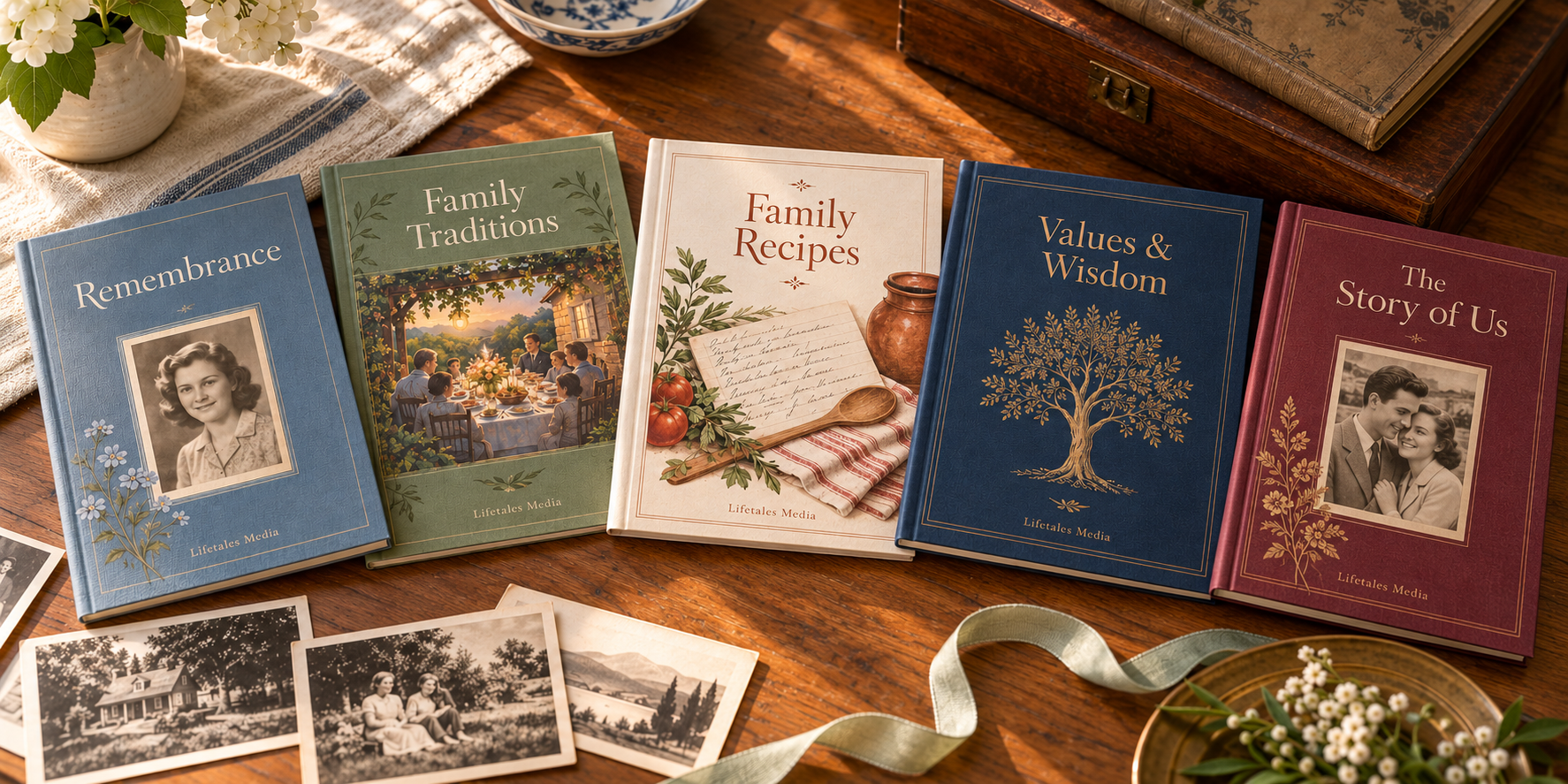
Finishing your legacy book is only part of the project. The next step is making sure the people you wrote it for can receive a copy.
Lifetales Media can use your materials to create a legacy book of your choosing and deliver a finished book to you or a PDF that you can upload yourself to one of the places below.
Here are several options.
| Option | Where or how | Good for |
| Print copies for family | Lulu offers personal printing and private access, allowing you to order books for gifts or private distribution. | Memoirs, family histories, and books intended for a limited audience. Lulu |
| Create a photograph-rich book | Blurb offers photo books and trade books, with the option to order one copy or several. | Photograph storybooks, recipe collections, and illustrated family histories. Blurb |
| Use a personal book-printing service | Barnes & Noble Press supports books printed for personal use as well as books offered for sale. | Family gifts or a project you might eventually share more widely. B&N Press |
| Make the book publicly available | Amazon Kindle Direct Publishing supports paperback, hardcover, and Kindle editions. Author copies are available for live print books. | Books you want relatives and other readers to purchase independently. kdp.amazon.com |
| Work with a local printer | Ask a local print shop about short runs, binding choices, paper samples, and help preparing files. | Small family editions, reunion books, or projects where you want personal assistance. |
Share a digital edition. A PDF can be emailed to relatives or placed in a shared folder. Use clear filenames, include the completion date, and explain how family members can download their own copies. For a private family book, choose restricted access.
Give the book at a meaningful gathering. A reunion, anniversary, birthday, or holiday can provide a natural occasion to distribute copies. Add a handwritten inscription explaining why you wanted that person to have the book.
Consider a library or historical society. If the book documents a community, local business, migration, or pioneer family, ask a relevant library, archive, or genealogical society whether it accepts family histories. Check its donation guidelines before sending a copy.
Help future relatives find it. Place a note with your family papers explaining where printed copies, the digital edition, and the original photographs are kept. Give that information to more than one person.
Before ordering several copies, order one sample and review it carefully. Check captions, photograph quality, type size, and binding. Compare the total cost, including shipping, and confirm whether your chosen service keeps the book private or lists it for public purchase.
Make a plan for passing it on
Give copies to several family members and tell them where the original materials are kept. Keep the editable manuscript and a PDF of the finished book, along with the photographs and recordings used to create it.
Store copies in more than one place, including a backup separate from your main computer. Leave clear instructions so someone you trust can locate and access the files. Review that plan occasionally as devices, accounts, and family circumstances change.
Begin this week with one photograph and one page. Identify the people, explain what was happening, and write what the image brings back. That single story gives your legacy book its first real page and gives a future reader something they would otherwise never know.
Help telling your family stories
Have a box of photographs, a collection of memories, or family research you want to turn into a book? Lifetales Media offers interviewing, writing, editing, and publishing services to help you shape the material into a legacy book. Visit http://www.lifetalesmedia.com to explore how to begin.