
A Place to Honor Your Ancestors and Preserve Your Legacy
Most family historians dream of discovering one more record, identifying one more photograph, or solving one more mystery. But there is another project that deserves just as much attention: creating a dedicated space in your home where your family’s history can be preserved, organized, and celebrated.
A family history room isn’t simply an office filled with filing cabinets. It’s a place where generations come together. It’s a workspace, an archive, a library, and a tribute to the people whose lives made yours possible.
Whether you have an entire spare room or just one corner of your home, you can create a meaningful space that inspires research and keeps your family’s stories safe for future generations.
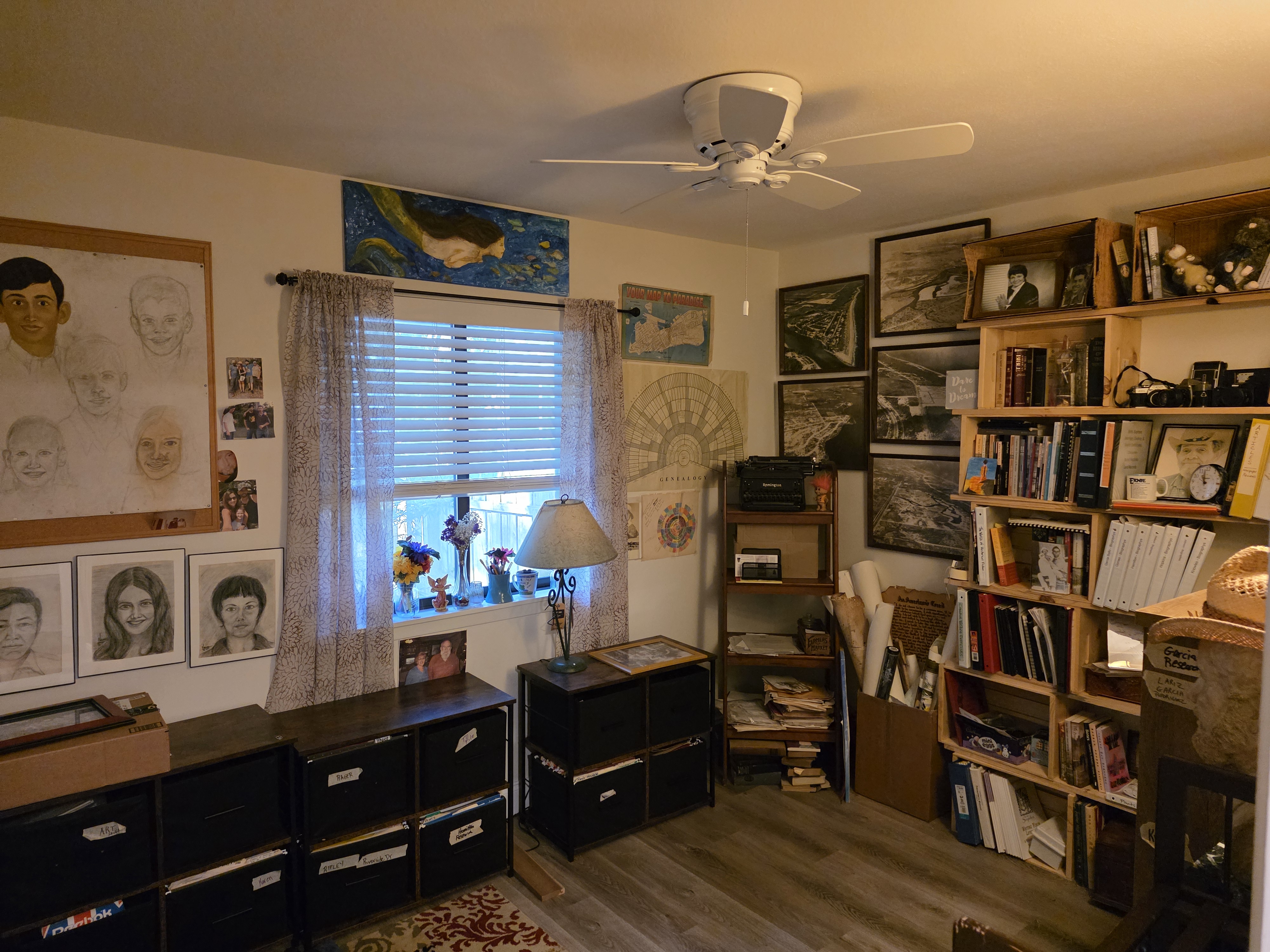
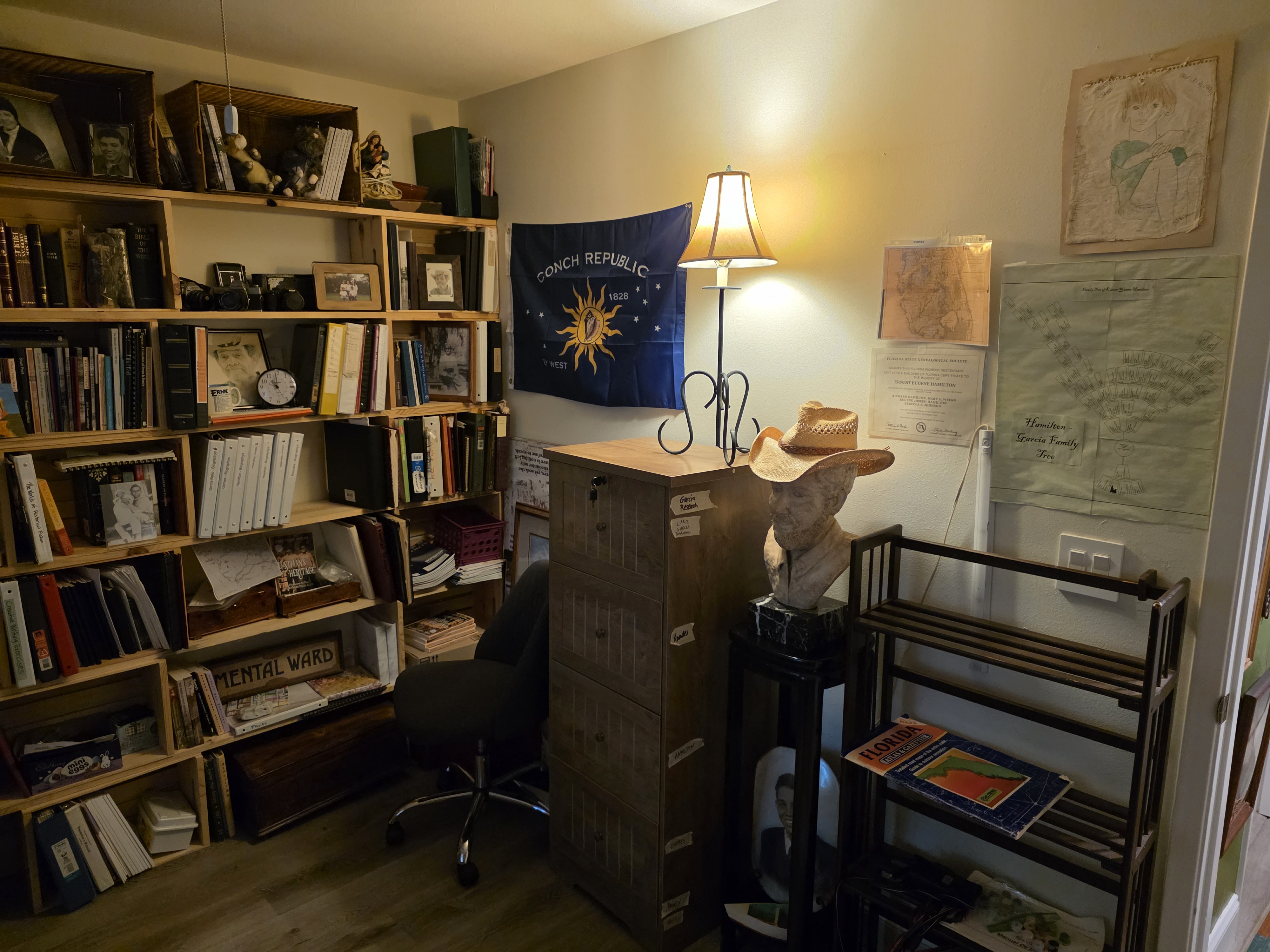
My family history in a spare bedroom.
This is where I keep all of the ancestor records and artifacts. It is still a work in progress.
Honor the Ancestors
The heart of your family history room should be a place of remembrance.
Display photographs of your ancestors where you can see them while you work. Frame old family portraits, military photographs, wedding pictures, or treasured heirlooms.
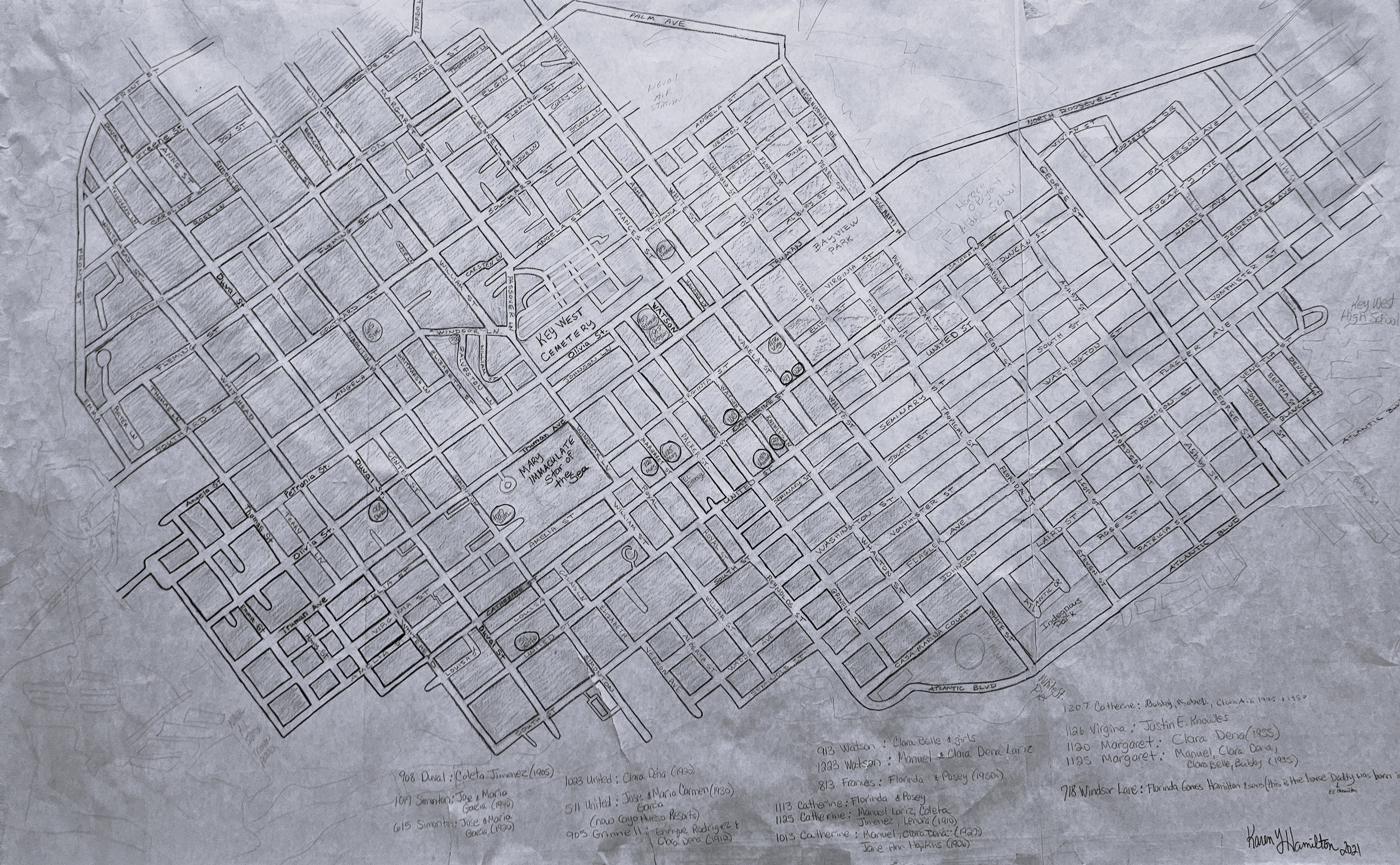
Include maps showing where your ancestors lived and copies of important documents that represent turning points in their lives.
You might also display:
- Family Bibles
- Vintage letters
- Old journals or diaries
- Immigration documents
- Military medals
- Quilts or handmade crafts
- Antique tools or household items
- Shadow boxes containing meaningful family keepsakes
These items transform research from collecting names and dates into remembering real people.
Every photograph reminds you that someone once laughed, struggled, dreamed, and hoped long before you arrived.
Create an Efficient Research Workspace
I don’t actually do research in my family history room, although I would recommend it. I have a separate office where I actually work on genealogy and writing. I use the history room to store all the records and artifacts.
I am most comfortable with a messy office, so I generally keep that aspect of history away from my history room. I include this here so that you will know it is okay to be messy! As long as you know where everything is, you’re doing okay. Be sure to put pulled files, etc. BACK in the history room though!
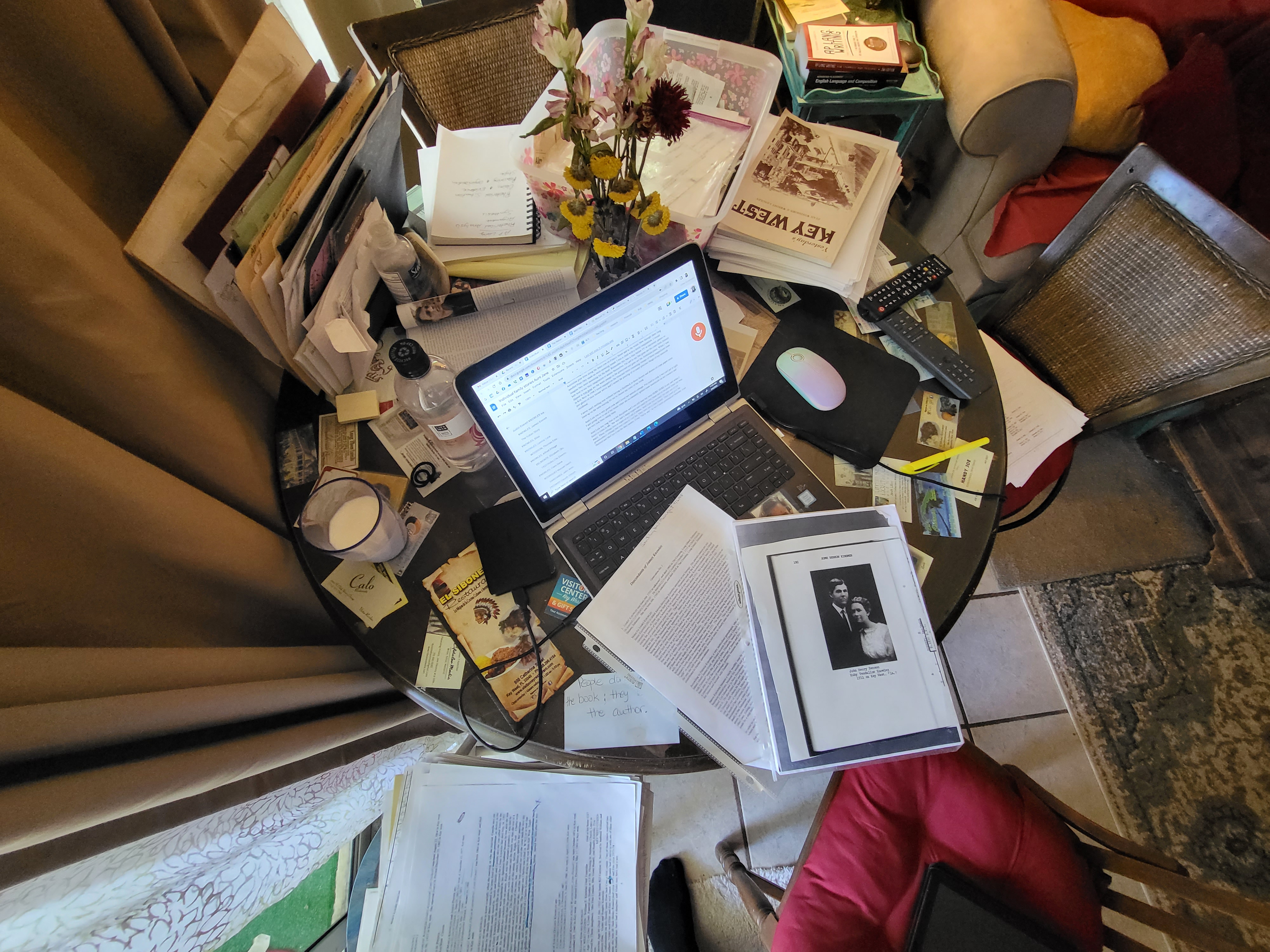
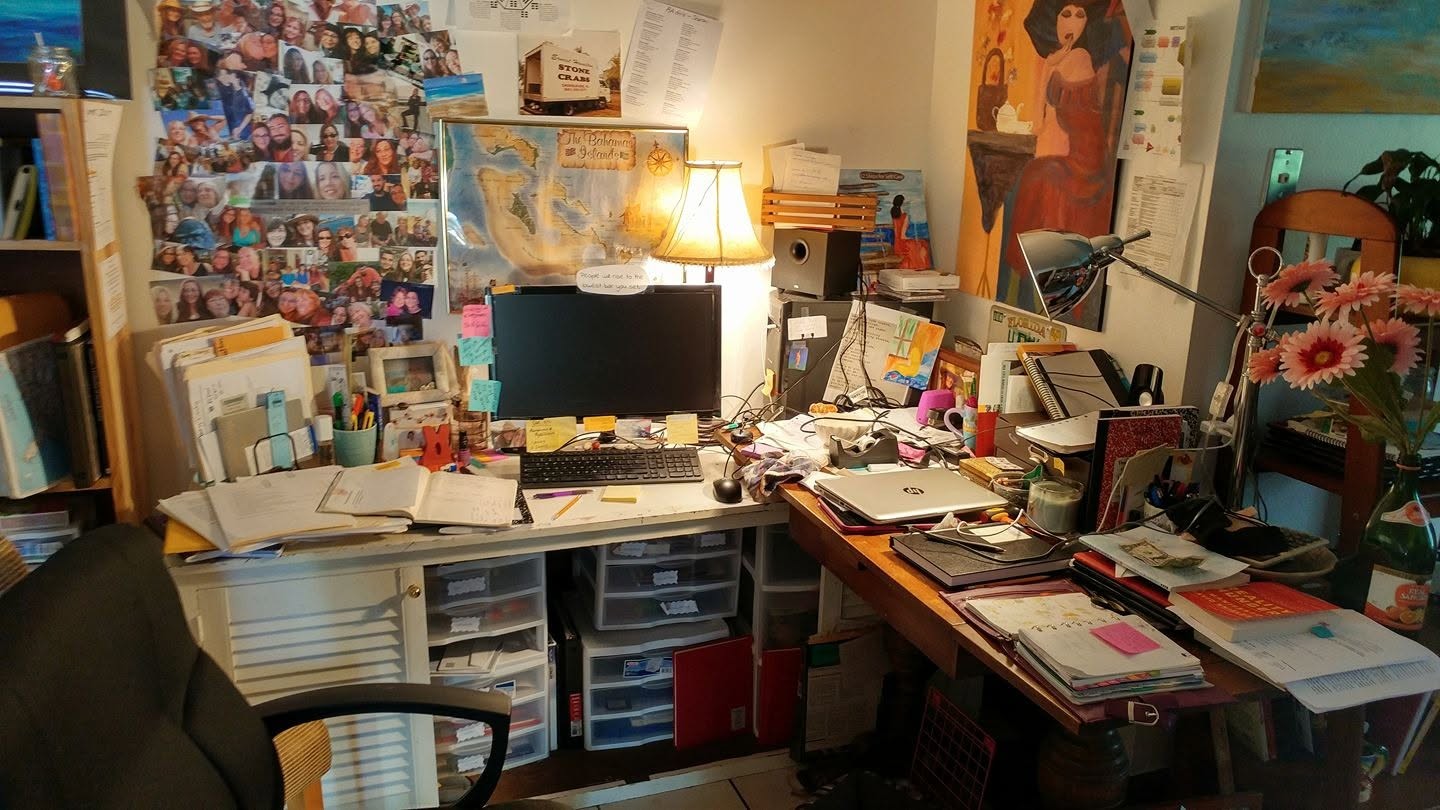
Genealogy often requires hours of reading, organizing, and analyzing records.
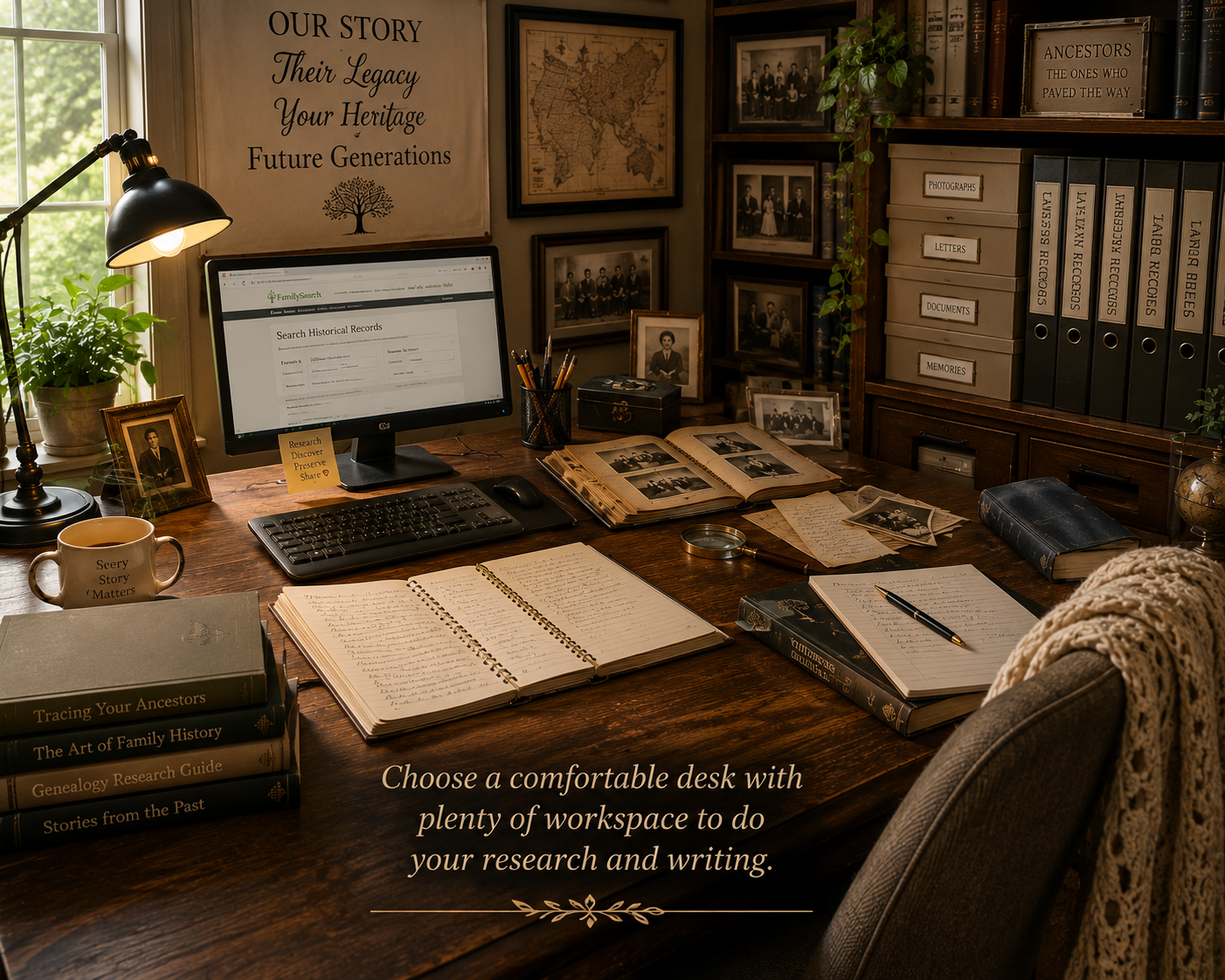
Choose a comfortable desk with plenty of workspace. A supportive chair and good lighting will make long research sessions much more enjoyable.
Consider including:
- A large computer monitor
- Scanner for preserving photographs and documents
- Printer
- External hard drives for backups
- Charging station for devices
- Notebook for research logs
- Whiteboard or corkboard for current projects
- Magnifying glass for reading old handwriting
Keep frequently used supplies within easy reach so you spend more time researching and less time searching for pens and paper.
This photo is what I aim for in my head. ha ha. Perhaps this article will spur me into getting more organized!
Build an Organized Archive
Research quickly becomes overwhelming without a good filing system.
Invest in archival-quality storage materials whenever possible.
Store documents using:
- Acid-free folders
- Archival storage boxes
- Sheet protectors
- Label makers
- Fire-resistant filing cabinet
- Waterproof storage containers for important originals
Organize records by family surname, location, or record type—whatever system you are most likely to maintain consistently.
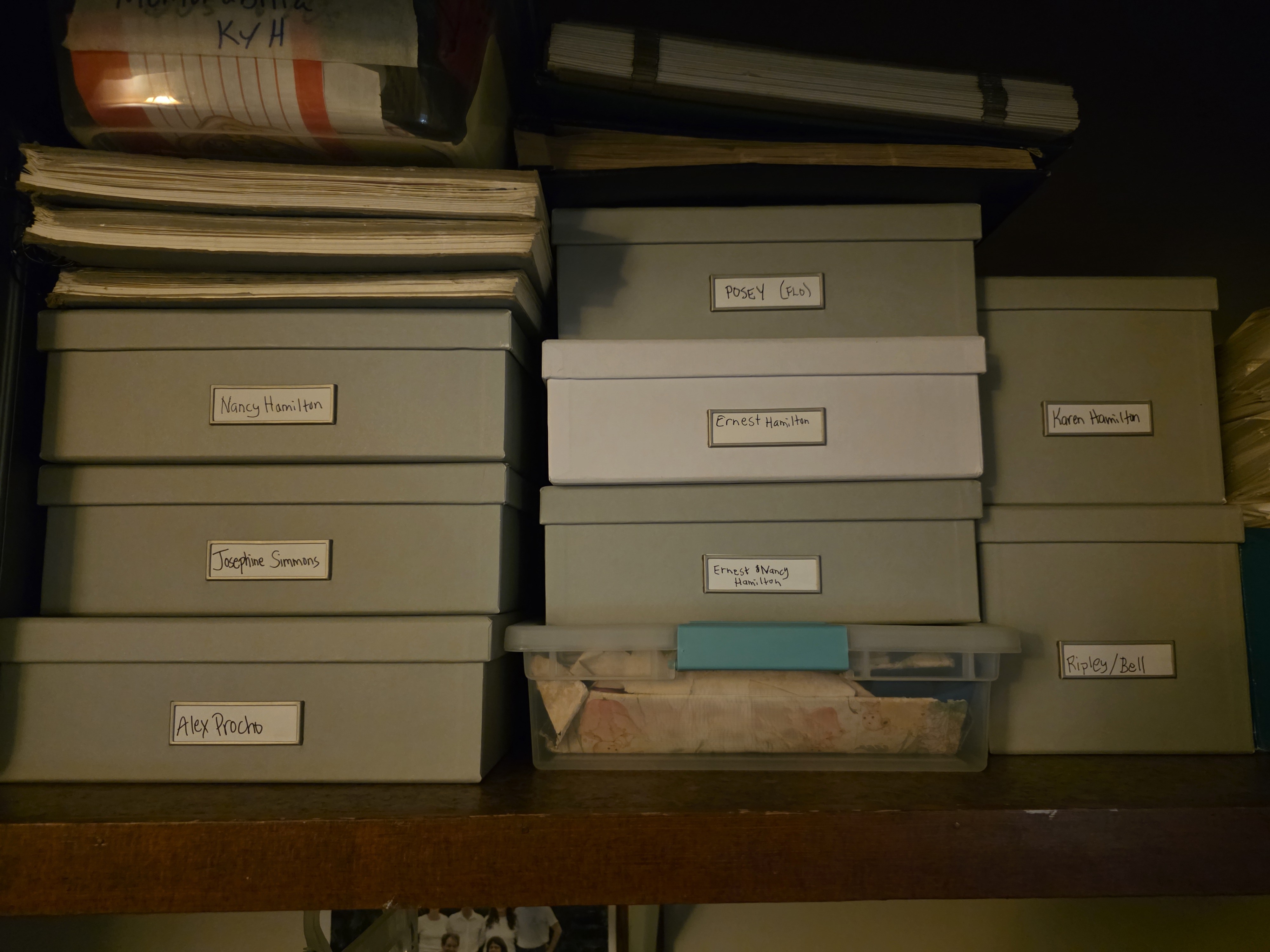
I use these archival storage boxes to keep items that I inherited when my parents (and ex-husband) died – their wallets, letters, important documents, etc. I can find what I need for them quickly this way.
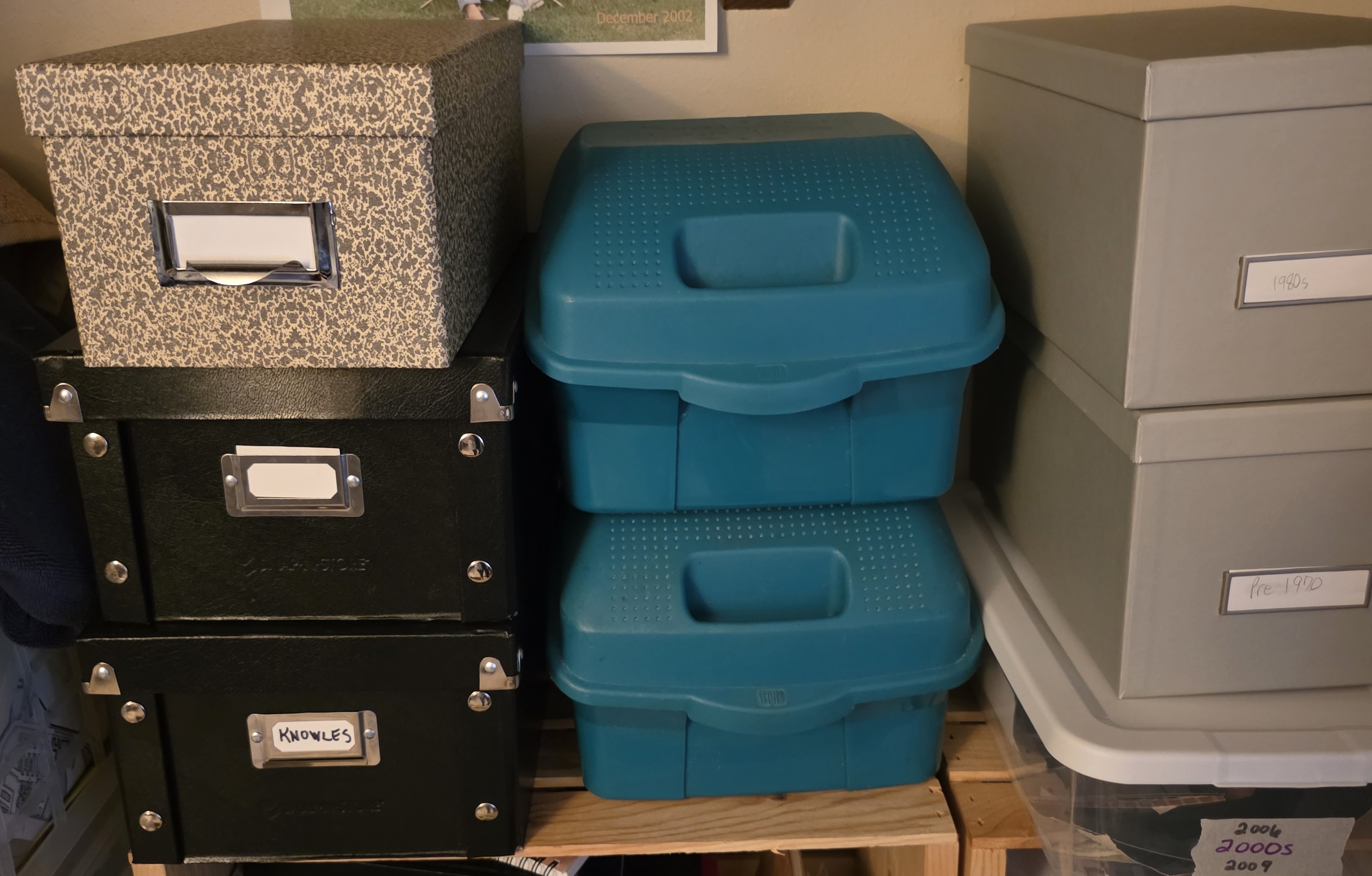
Remember:
If you cannot find a document in thirty seconds, your filing system probably needs improvement.
Protect Precious Originals
Some family treasures simply cannot be replaced.
Store original photographs, letters, journals, certificates, and heirlooms away from direct sunlight, moisture, and extreme temperatures.
Digitize everything.
Create multiple backups:
- External hard drive
- Cloud storage
- Additional backup stored off-site
Your research may represent thousands of hours of work. Protect it accordingly.
Build Your Family History Library
Surround yourself with resources that make research easier. This is my history bookshelf.
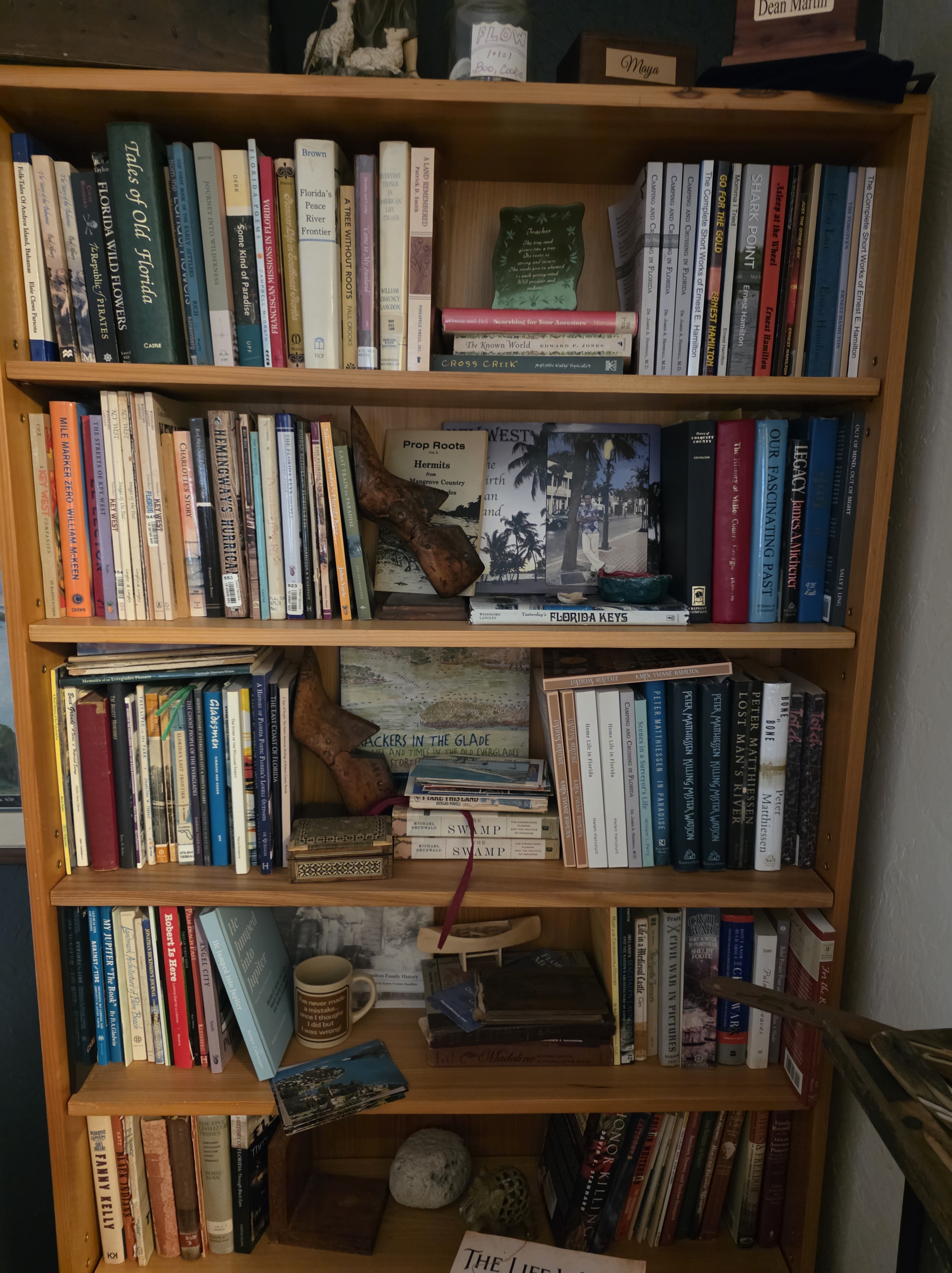
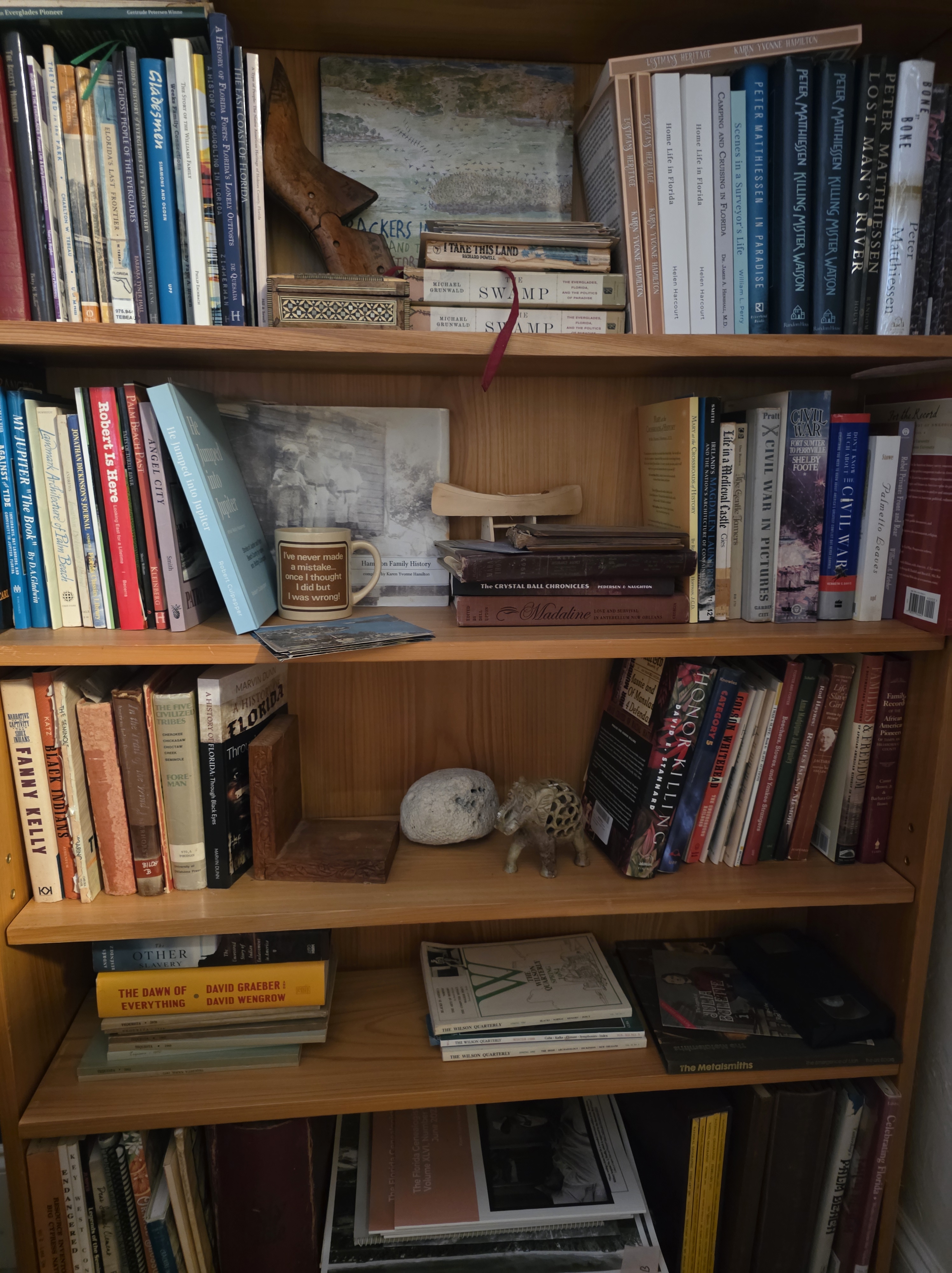
Your library might include:
- Local history books
- County histories
- Cemetery guides
- Historical atlases
- Maps
- Research methodology books
- Writing guides
- DNA reference books
- Family histories you’ve written
Leave room for notebooks and binders containing your own research.
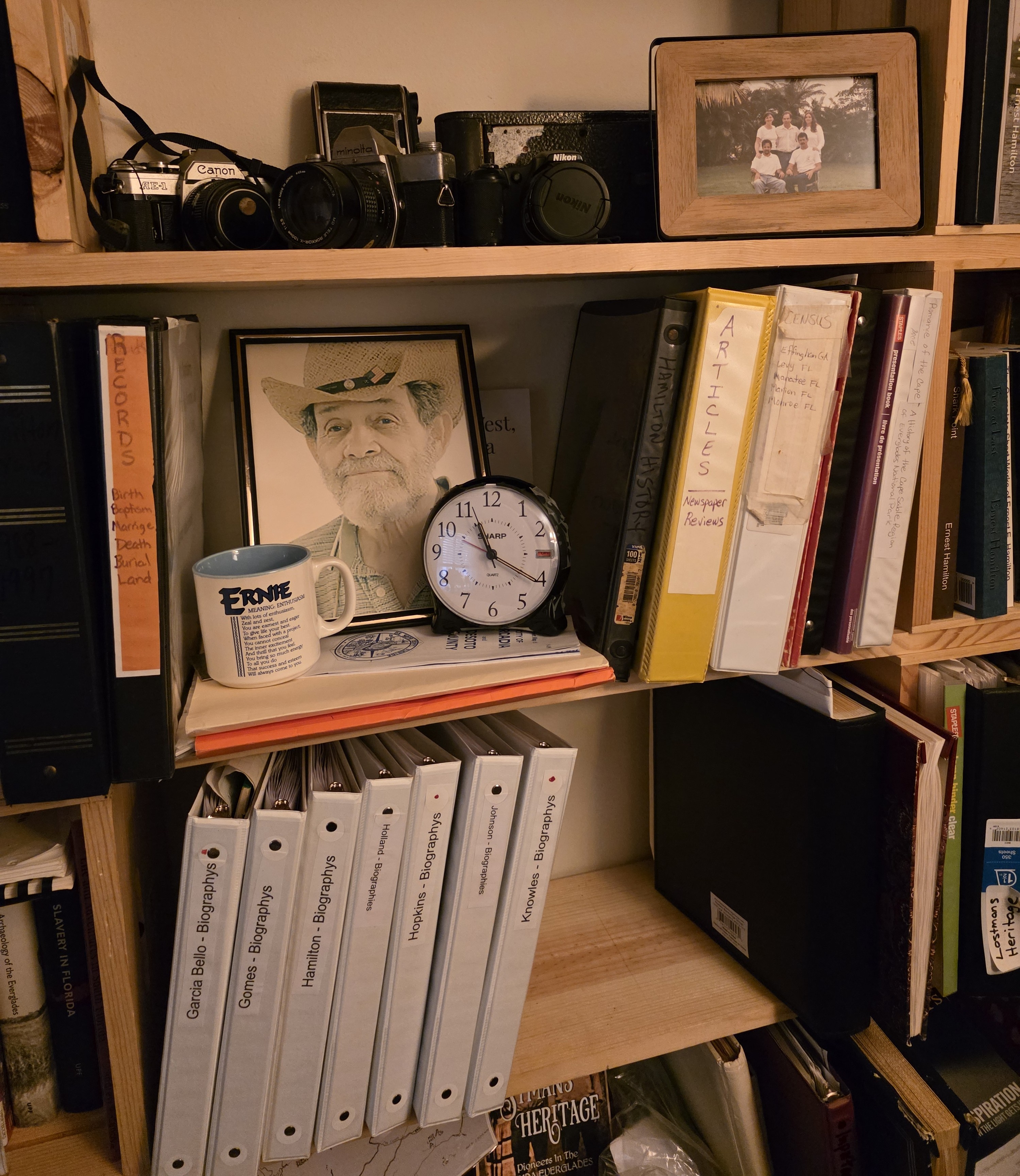
Over time, your library becomes just as valuable as your document collection.
Create a Storytelling Corner
Genealogy is about far more than records.
Reserve a comfortable chair where you can read journals, study old photographs, interview relatives, or simply reflect on the people you’ve discovered.
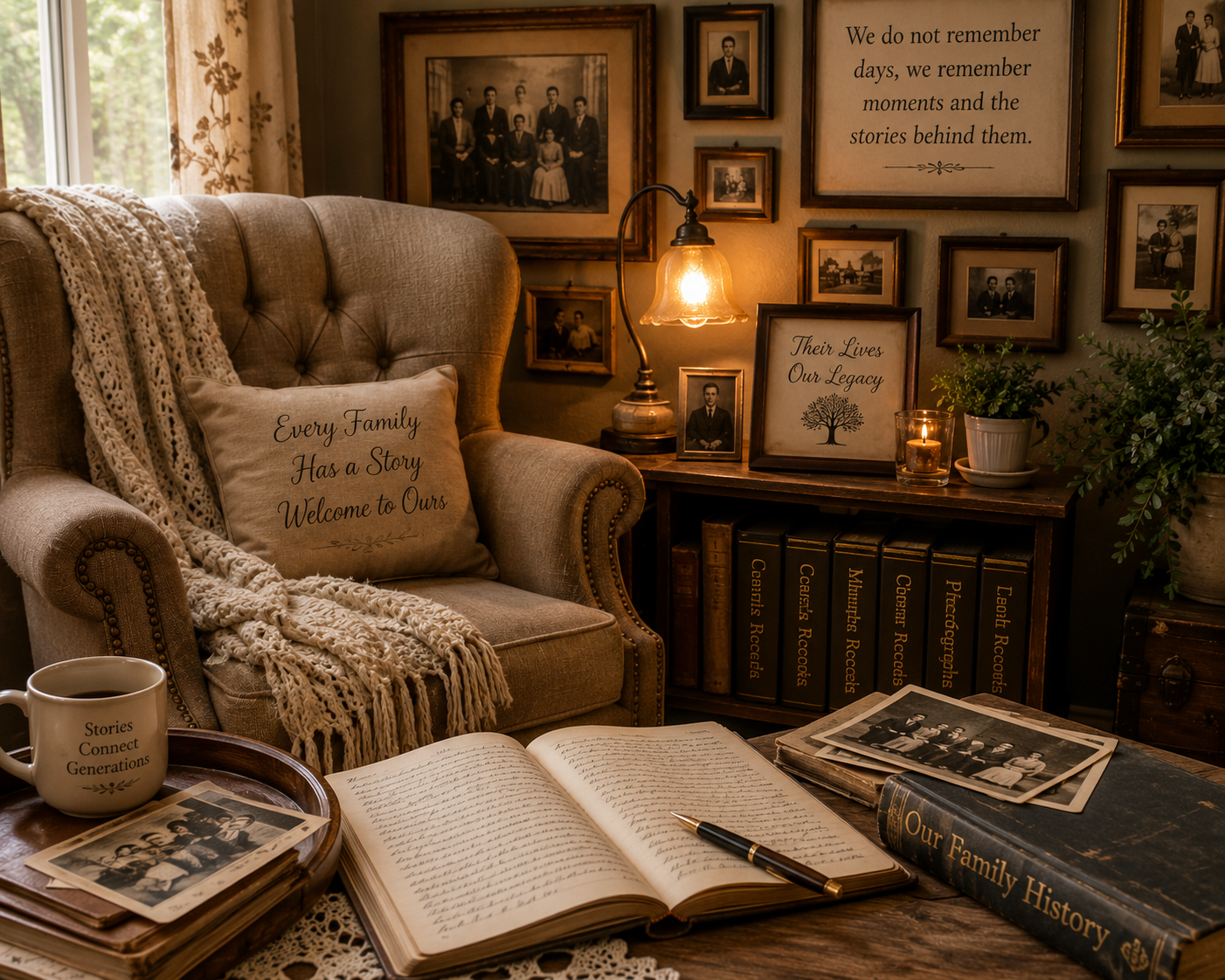
This quiet corner may become the place where your next book, blog post, memoir, or family narrative begins.
Sometimes the best discoveries happen when we stop searching and simply listen to the stories waiting to be told.
Make It a Place the Family Wants to Visit
A family history room should invite curiosity. I have one grandchild who loves to wander the history room and ask questions about his ancestors.
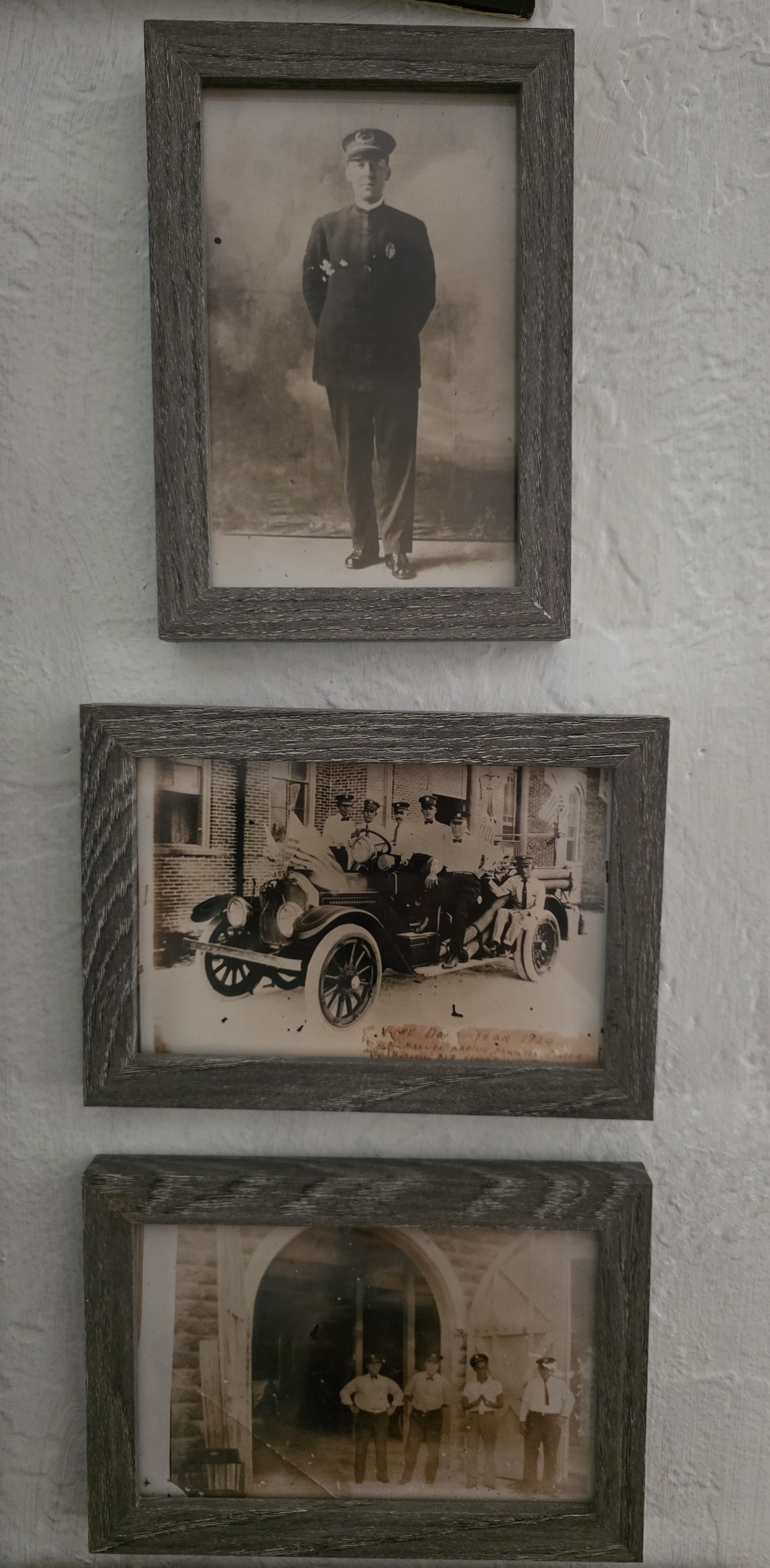
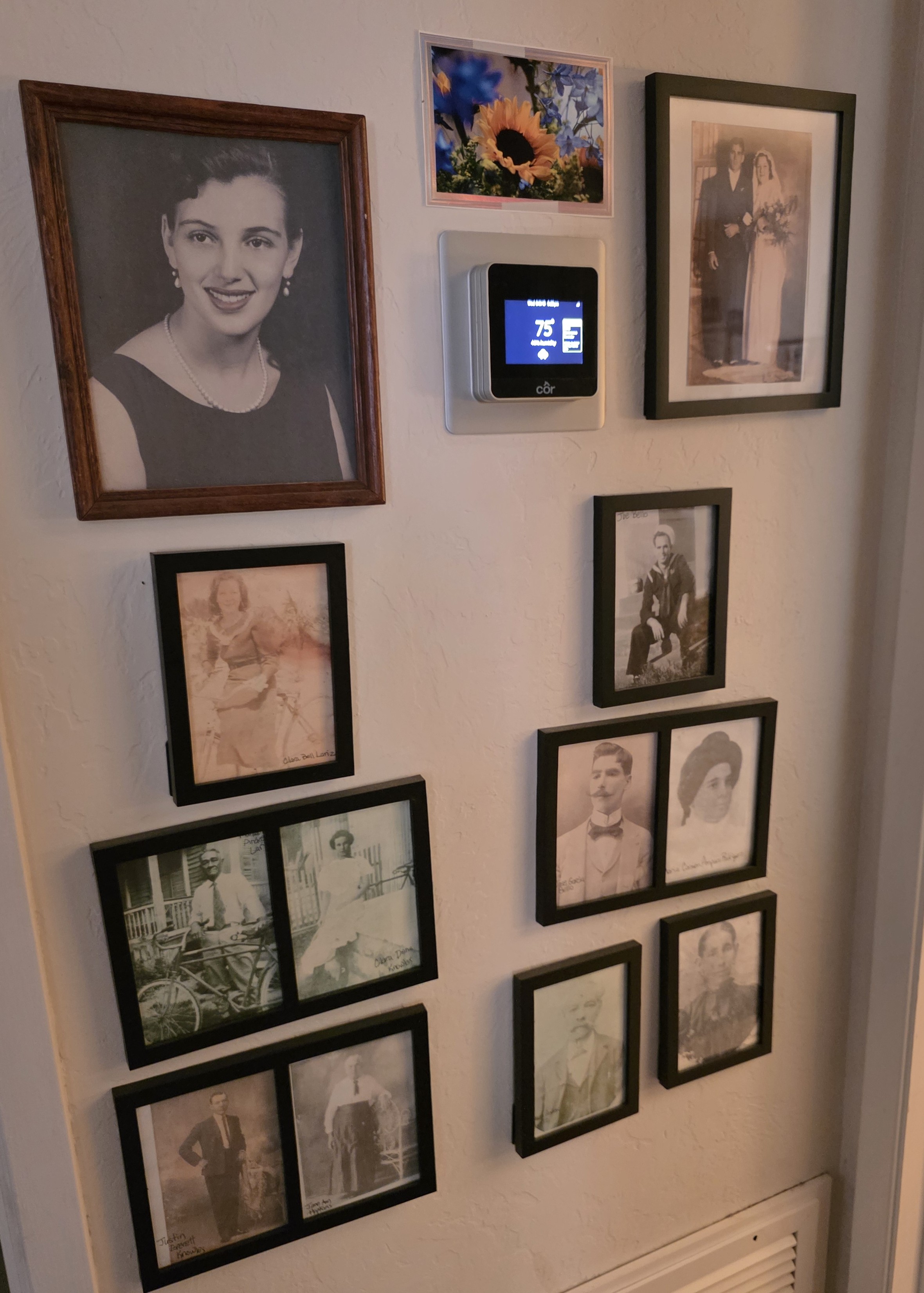
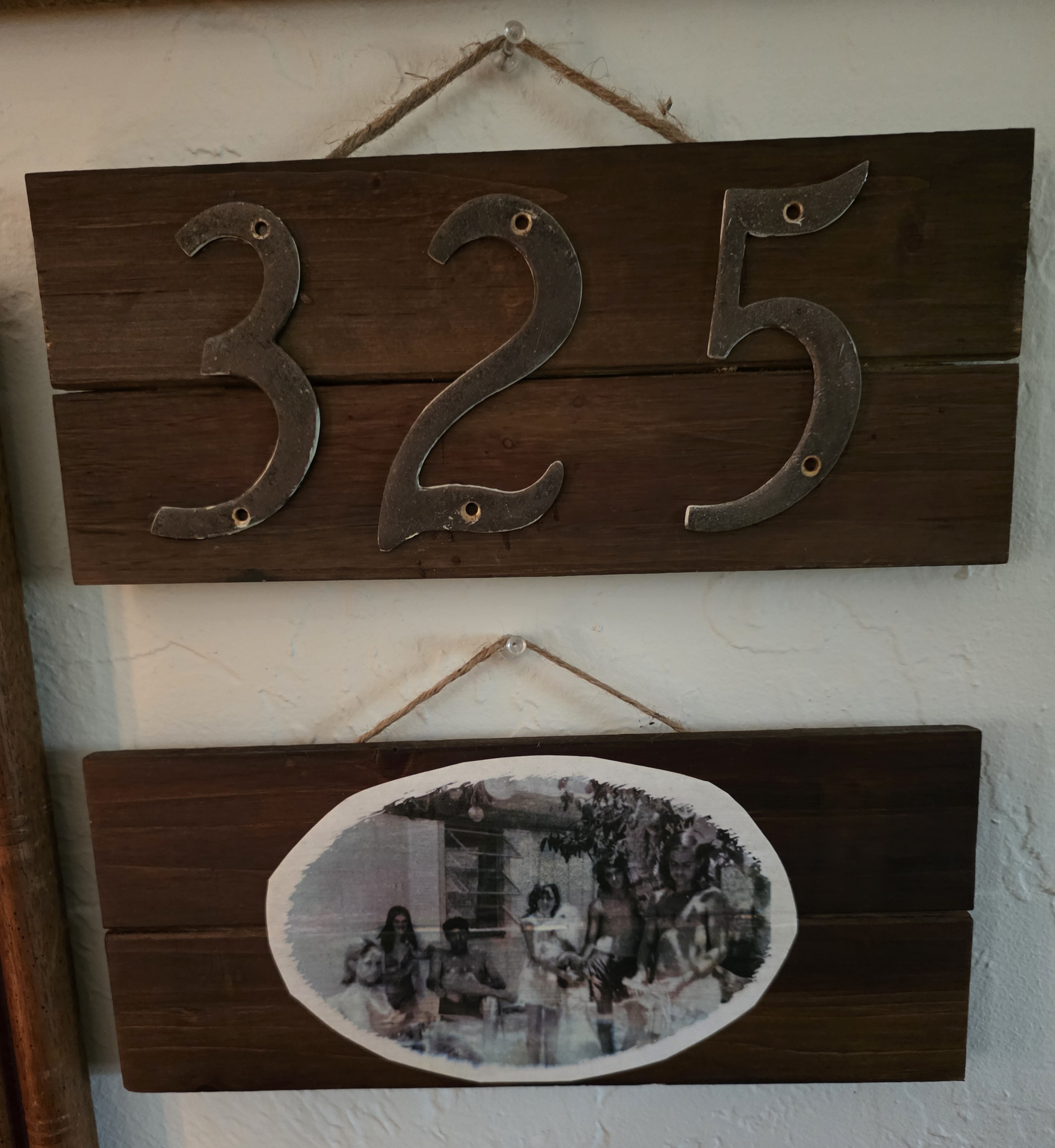
Display rotating exhibits that change throughout the year.
Ideas include:
- Ancestor of the Month
- Military service display
- Family migration map
- Vintage holiday photographs
- Wedding collections
- Childhood memorabilia
- Family recipe displays
Children and grandchildren are far more likely to ask questions when they see history displayed rather than stored away in boxes.
Leave Space for Future Generations
Your family history room should never feel finished. Leave empty shelves. Reserve archival boxes for future discoveries. Keep journals where today’s stories can become tomorrow’s history.
Remember that you are not only preserving the past—you are creating the historical record your descendants will one day treasure.
Your Legacy Begins at Home
Creating a family history room is an investment in memory. It tells your family that their stories matter. It protects irreplaceable records. It inspires new discoveries. Most importantly, it honors the people whose courage, sacrifices, and ordinary lives made your own possible. Your ancestors cannot preserve their stories anymore. But you can. And one day, someone will thank you for it.
Final Thought
Every family deserves a place where its history is valued.
Whether your family history room is an entire library or a single bookshelf beside your desk, let it become a space where names become people, records become stories, and memories become a lasting legacy.


